
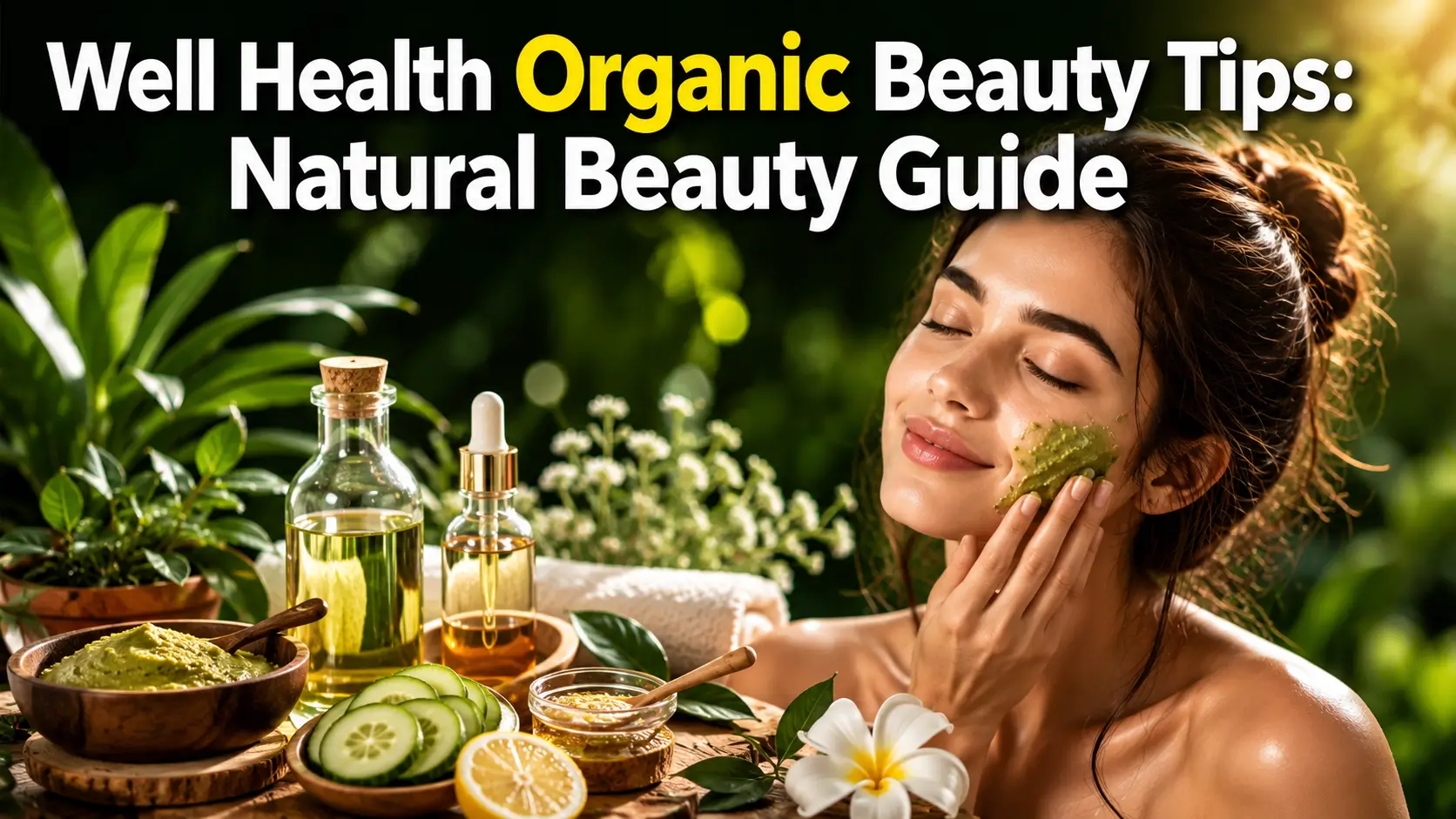

Choosing Natural Beauty Care for Long-Term Wellness
Well Health Organic Beauty Tips can help you build natural skincare and haircare routines without chasing quick results from commercial products.
Organic remedies can focus on nourishing your skin and body from the inside out. Avoiding unnecessary harsh chemicals, topical products, and synthetic compounds may also reduce skin irritation. Check ingredient quality before using a face cream, especially when choosing organic ingredients. Claims that 60% gets absorbed through skin vary by ingredient and formula, so don’t treat this figure as universal.
An average woman may use 12 personal care products daily, sometimes before breakfast. Claims involving 160 chemicals and hormones need careful context. Clean skincare, balanced nutrients, and essential vitamins support overall wellness. Wellness experts may also discuss high-quality supplements, including liposomal vitamins and liposomal supplements, but these should complement healthy habits. Supporting nutrient absorption, immune health, energy, and skin vitality works best through a balanced wellness lifestyle and a simple, consistent routine.
What Makes an Organic Beauty Routine Different?
Organic beauty generally emphasizes plant-derived ingredients and products made with organically grown raw materials. However, the word organic doesn’t automatically guarantee a better beauty product.
A product can contain natural ingredients and still irritate your skin. Likewise, some synthetic ingredients can be highly useful, stable, and well tolerated.
The quality of the complete formula matters.
For example, aloe vera may feel soothing on dry or irritated skin. Yet a product containing aloe plus strong fragrance may cause problems for someone with sensitive skin. The ingredient list and formulation therefore matter more than a marketing label alone.
Natural Ingredients vs. Organic Ingredients
These terms often get mixed together.
- Natural usually describes an ingredient derived from plants, minerals, animals, or other natural sources.
- Organic generally refers to agricultural production and processing standards.
- Plant-based means an ingredient comes primarily from plants, but it doesn’t necessarily mean organic.
- Synthetic means an ingredient has been manufactured through chemical processes.
None of these labels tells you everything about safety or effectiveness.
A thoughtful beauty routine asks a better question: Does this ingredient and formulation suit the skin or hair?
Why Ingredient Quality Matters
Your skin acts as a protective barrier. Excessive cleansing, harsh scrubbing, strong fragrances, and irritating ingredients can disturb that barrier.
When the barrier becomes compromised, skin may feel tight, dry, itchy, or unusually reactive.
That makes a simple routine especially valuable.
Look for products that:
- Match your skin type
- Contain ingredients you tolerate well
- Avoid unnecessary irritants
- Provide adequate moisture
- Protect against ultraviolet radiation
- Have clear ingredient information
- Come from reliable manufacturers
Organic-inspired beauty should be gentle, consistent, and realistic rather than complicated.
Build a Simple Daily Skincare Routine
Good skincare doesn’t need to feel like a second job. A basic routine can cover most everyday needs when you choose products carefully.
The core steps are cleansing, moisturizing, and sun protection. Other products can address specific concerns when necessary.
Morning Routine for Fresh, Healthy-Looking Skin
Start your morning with gentle cleansing if your skin needs it. People with very dry or sensitive skin may prefer rinsing with lukewarm water instead of using a strong cleanser.
Next, apply a moisturizer suited to your skin type.
Finally, use broad-spectrum sunscreen on exposed skin. Sun protection remains one of the most important steps for preventing premature skin aging and reducing UV-related skin damage.
A practical morning routine might look like this:
| Step | Purpose | Simple approach |
| Cleanse | Remove overnight oil and residue | Use a gentle cleanser |
| Moisturize | Support the skin barrier | Choose according to skin type |
| Protect | Reduce UV exposure | Apply broad-spectrum sunscreen |
| Optional treatment | Address a specific concern | Add only when needed |
Don’t add several new products at once. If irritation develops, you’ll have trouble identifying the cause.
Nighttime Routine for Skin Recovery
Nighttime care should focus on removing buildup and maintaining moisture.
If you wear makeup or sunscreen, remove it thoroughly. Follow with a gentle cleanser when needed.
Then apply moisturizer.
People with dry skin may benefit from richer creams. Oily skin often feels better with lightweight lotions or gel-based formulas.
The goal isn’t to make your face feel squeaky clean. That tight feeling can signal that you’ve removed too much surface oil.
Choose Products Based on Your Skin Type
Skin type can change with climate, age, hormones, medication, and daily habits.
Dry skin: Choose creamy cleansers and richer moisturizers. Avoid excessive hot-water exposure.
Oily skin: Use lightweight, non-comedogenic products. Washing aggressively can worsen dryness and irritation.
Combination skin: Treat different areas according to their needs rather than forcing one heavy product everywhere.
Normal skin: Keep the routine simple. More products don’t automatically produce better results.
Sensitive skin: Prioritize fragrance-free, gentle formulas. Patch-test unfamiliar products before applying them broadly.
Beauty rule worth remembering: If a product repeatedly burns, stings, or causes redness, stop using it.
Natural Ingredients Worth Knowing
Several natural ingredients have practical uses in skincare. Their benefits depend on concentration, formulation, skin type, and individual tolerance.
Aloe Vera for Soothing Hydration
Aloe vera gel contains water and various plant compounds. Properly formulated aloe products can provide a cooling and soothing sensation.
It’s particularly popular after sun exposure and for temporarily calming dry-feeling skin.
However, aloe isn’t a cure for burns, eczema, acne, or other medical conditions. Severe irritation or burns need appropriate medical care.
When using fresh aloe, hygiene also matters. Contamination can turn a simple home remedy into a skin problem.
Oatmeal for Dry or Irritated Skin
Oatmeal has a stronger reputation in dermatology than many kitchen beauty ingredients.
Colloidal oatmeal contains finely processed oat material that can help soothe dry and irritated skin. It also supports moisture retention.
A gentle oatmeal treatment can work well for people who dislike heavily fragranced products.
Avoid rough oatmeal scrubbing. Scrubbing irritated skin can create microscopic damage and make redness worse.
Honey for Moisture and Skin Care
Honey naturally attracts and holds water. It also contains compounds that make it interesting for topical skincare.
A simple honey mask may leave skin feeling softer and more moisturized.
Still, honey isn’t a universal acne treatment. It shouldn’t replace proven treatment for persistent breakouts.
People with allergies should also avoid ingredients that trigger reactions.
Rose Water for a Refreshing Routine
Rose water has long appeared in traditional beauty routines. Its main appeal comes from its refreshing feel and light botanical scent.
However, not every rose-water product suits sensitive skin. Added fragrance and preservatives can cause irritation in some people.
For daily use, choose a simple product that your skin tolerates well.
Plant Oils for Moisture
Plant oils can soften skin by reducing moisture loss and improving the feel of the skin surface.
Common choices include:
- Jojoba oil: Lightweight and useful for conditioning.
- Argan oil: Often used to soften skin and hair.
- Coconut oil: Highly occlusive and useful for some dry skin and hair types.
- Sunflower oil: A lightweight option used in many skincare formulations.
Face oils aren’t ideal for everyone. Some people may experience clogged pores or irritation.
Start with a small amount and observe how your skin responds.
DIY Organic Beauty Treatments: What Helps and What to Avoid
Homemade skincare can be inexpensive. It can also go wrong quickly.
The biggest mistake involves assuming that an edible ingredient automatically belongs on your face.
Skin has a different structure and tolerance than the digestive system.
Gentle Homemade Options
A few simple approaches are generally more sensible than aggressive kitchen remedies.
Oatmeal treatment: Finely ground oatmeal mixed with water can create a mild soothing paste.
Aloe treatment: A clean, suitable aloe product can provide temporary hydration and cooling.
Honey mask: A thin layer of plain honey can provide a moisturizing feel for people who tolerate it.
Keep homemade treatments simple. Don’t combine six ingredients simply because each one sounds beneficial.
DIY Ingredients That Can Backfire
Some popular remedies deserve a firm warning.
| Ingredient | Common DIY claim | Main concern |
| Lemon juice | Lightens dark spots | Can irritate skin and increase photosensitivity |
| Baking soda | Removes oil and acne | Can be too alkaline and irritating |
| Toothpaste | Dries pimples | May cause irritation and burns |
| Undiluted essential oils | Treat acne or improve skin | Can trigger irritation or allergic reactions |
| Rough sugar scrubs | Remove dead skin | Can cause excessive physical irritation |
Natural doesn’t mean harmless.
That’s one of the most important principles in organic beauty care.
Patch Testing Before Trying a New Remedy
Before applying a new product or homemade treatment across your face, test a small area first.
Apply a small amount to an inconspicuous area and monitor the skin.
Watch for:
- Burning
- Persistent redness
- Swelling
- Itching
- Rash
- Blistering
- Increased sensitivity
If a reaction occurs, wash the product away and discontinue use.
Natural Hair Care for Stronger, Healthier Hair
Beautiful hair begins at the scalp but depends heavily on how you treat the entire hair shaft.
Hair is made mostly of keratin, a structural protein. Once hair grows out of the scalp, the visible shaft is no longer living tissue. That means damaged ends can’t truly “heal” themselves.
You can condition them, smooth them, and reduce further damage. You can’t permanently reverse structural damage with an oil.
Build a Practical Weekly Hair-Care Routine
Your washing schedule should reflect your scalp and hair type.
An oily scalp may need more frequent washing. A dry or tightly curled hair type may need less frequent cleansing.
Use shampoo mainly on the scalp rather than aggressively scrubbing the entire length.
Apply conditioner to the lengths and ends when appropriate.
Then detangle gently.
A useful routine includes:
- Wash according to scalp oiliness
- Condition regularly
- Use lukewarm rather than very hot water
- Detangle from the ends upward
- Limit excessive heat
- Avoid constant tight hairstyles
- Trim severely split ends when necessary
Oils That Can Support Hair Care
Hair oils can improve softness and reduce friction. Some oils can also reduce protein loss from hair during washing.
Coconut oil has particularly useful properties for hair because it can penetrate the hair shaft more effectively than many other oils.
Argan oil is commonly used as a finishing oil because it helps hair feel smoother and softer.
Jojoba oil can provide lightweight conditioning.
However, none of these oils guarantees new hair growth.
If someone has significant hair thinning, an oil cannot address every possible cause.
Scalp Care Matters Too
A healthy scalp creates a better environment for normal hair growth.
Wash away excess oil, sweat, and product buildup according to your scalp’s needs.
Persistent dandruff, intense itching, painful bumps, crusting, or sudden hair loss deserves professional evaluation.
Don’t keep adding oils when the scalp problem may actually involve inflammation or another underlying condition.
Hair Habits That Cause More Damage Than Good
Some habits quietly undermine otherwise good hair care.
Frequent high-heat styling can weaken the hair shaft.
Tight hairstyles can place repeated tension on follicles.
Aggressive brushing can snap fragile strands.
Repeated chemical processing can increase dryness and breakage.
Rough towel drying can create unnecessary friction.
A softer approach often produces better long-term results than an elaborate treatment schedule.
Nutrition for Naturally Healthy Skin and Hair
Beauty isn’t created entirely in the bathroom.
Skin and hair require energy, protein, vitamins, minerals, essential fats, and adequate hydration. A severely restrictive diet can therefore affect appearance as well as overall health.
Protein: The Building Block of Hair and Skin
Protein supplies amino acids needed to build keratin and other structural proteins.
Useful protein sources include:
- Eggs
- Fish
- Chicken
- Yogurt
- Milk
- Lentils
- Beans
- Chickpeas
- Tofu
- Nuts and seeds
Extreme dieting can contribute to increased hair shedding in some people. Adequate nutrition matters more than any single “beauty food.”
Vitamins and Minerals That Matter
Several nutrients have important roles in normal skin and hair function.
| Nutrient | Main role | Food examples |
| Vitamin C | Collagen production and antioxidant function | Citrus, peppers, berries |
| Vitamin A | Normal skin maintenance | Sweet potatoes, carrots, leafy greens |
| Vitamin E | Antioxidant function | Nuts, seeds, vegetable oils |
| Vitamin D | Supports normal body functions | Fortified foods, fatty fish |
| Iron | Oxygen transport | Meat, lentils, beans, leafy greens |
| Zinc | Supports skin and tissue repair | Meat, dairy, beans, seeds |
| Omega-3 fats | Supports normal cell function | Fatty fish, walnuts, flax |
Supplements aren’t automatically better. High doses of certain nutrients can cause harm.
Food should usually provide the foundation unless a healthcare professional identifies a deficiency or specific need.
Hydration and Skin Health
Water matters because dehydration can affect normal body function. Yet drinking enormous amounts won’t magically erase acne, wrinkles, or pigmentation.
A better strategy involves drinking according to thirst and maintaining normal hydration.
Water-rich foods can help too.
Examples include:
- Cucumbers
- Watermelon
- Oranges
- Strawberries
- Tomatoes
- Soups and broths
Hydration supports healthy function. It isn’t a miracle skin treatment.
Lifestyle Habits That Improve Your Natural Appearance
The most underrated beauty products aren’t stored in a bottle.
Sleep, movement, stress management, nutrition, and sun protection can influence how healthy your skin and hair look over time.
Sleep and Skin Recovery
Adults generally need around 7–9 hours of sleep each night.
Consistently poor sleep can contribute to a tired appearance and may affect skin barrier function and recovery.
A regular sleep schedule often helps more than occasional long sleep sessions.
Create a simple nighttime rhythm. Reduce unnecessary stimulation before bed and keep your sleeping environment comfortable.
Stress Management
Stress doesn’t cause every skin or hair problem. However, prolonged stress can influence several biological processes.
Some people notice more acne during stressful periods. Significant physical or emotional stress can also precede temporary increases in hair shedding.
Simple stress-management habits can help:
- Take a daily walk
- Practice slow breathing
- Spend time outdoors
- Maintain social connections
- Keep a realistic workload
- Create a consistent bedtime routine
The goal isn’t to eliminate stress completely. That’s unrealistic. Instead, build better recovery habits.
Exercise and Circulation
Regular physical activity supports cardiovascular health, metabolic health, mood, and overall well-being.
Those benefits indirectly support healthy-looking skin and hair.
You don’t need an expensive fitness program.
Walking, cycling, strength training, swimming, and other enjoyable activities can all contribute to a healthier lifestyle.
After heavy sweating, cleanse the skin when appropriate. Leaving sweat and products sitting on the skin for long periods may aggravate some people’s acne or irritation.
Sun Protection
Sun exposure is one of the biggest environmental contributors to visible skin aging.
Ultraviolet radiation can contribute to:
- Wrinkles
- Uneven pigmentation
- Loss of skin elasticity
- Sunburn
- Cumulative skin damage
Sunscreen works best as part of a broader strategy.
Use shade, protective clothing, hats, and sunglasses when appropriate.
Even the most carefully designed natural skincare routine can’t compensate for repeated unprotected UV exposure.
Targeted Organic Beauty Tips for Common Concerns
Different concerns need different strategies. Treating every skin problem with the same homemade mask rarely works.
Acne-Prone Skin
Acne develops through several interacting processes, including clogged follicles, oil production, inflammation, and hormonal influences.
Gentle skincare can help support acne-prone skin.
Try to:
- Cleanse gently
- Avoid picking pimples
- Choose non-comedogenic products
- Remove makeup before sleeping
- Avoid harsh scrubs
- Keep pillowcases clean
- Use sunscreen consistently
Persistent or severe acne may require evidence-based treatment rather than DIY remedies.
Dark Spots and Uneven Skin Tone
Pigmentation can develop after acne, inflammation, hormonal changes, or sun exposure.
The first step is often sun protection.
Aggressive bleaching or acidic kitchen remedies can worsen irritation and potentially deepen discoloration.
Give pigmentation time. Skin doesn’t change overnight.
Dry and Rough Skin
Dry skin often benefits from reducing moisture loss rather than repeatedly adding harsh treatments.
Use gentle cleansers, moisturizers, and lukewarm water.
Avoid long, hot showers if they leave your skin tight.
A moisturizer containing ingredients such as glycerin, ceramides, or other barrier-supporting compounds can be more useful than a complicated DIY mixture.
Sensitive Skin
Sensitive skin needs restraint.
Use fewer products and introduce changes gradually.
Fragrance-free formulas can be useful when fragrance causes irritation.
Patch testing becomes especially important.
If your skin repeatedly burns or develops a rash, stop experimenting with home remedies. Persistent symptoms deserve professional assessment.
Hair Fall and Thinning
Everyone loses some hair each day. Noticeably increased shedding is different.
Temporary shedding can occur after illness, major stress, significant weight loss, nutritional problems, or other changes.
Sudden or persistent hair loss shouldn’t automatically be blamed on shampoo or oil.
A professional can help identify whether the problem involves nutrition, hormones, genetics, scalp disease, medication, or another cause.
How to Choose Better Organic Beauty Products
A beautiful package doesn’t guarantee a useful formula.
When shopping for organic-inspired beauty products, examine the complete formulation rather than focusing on one attractive ingredient.
Read the Ingredient List
Look at the first several ingredients because they usually make up a significant portion of the formula.
Pay attention to:
- Fragrance
- Essential oils
- Preservatives
- Potential allergens
- Active ingredients
- Moisturizing agents
- Botanical extracts
A long ingredient list isn’t automatically bad. Likewise, a short list isn’t automatically better.
Look Beyond the “Organic” Label
Consider the product’s purpose and formulation.
Ask:
- Does it suit your skin or hair type?
- Does the ingredient list make sense?
- Does your skin tolerate it?
- Is the packaging appropriate for the formula?
- Does the manufacturer provide clear product information?
- Can the product remain stable during normal storage?
These questions provide more useful information than marketing language alone.
Natural vs. Synthetic: Which Is Better?
There isn’t a universal winner.
Some natural ingredients offer excellent moisturizing, soothing, or conditioning properties. Others can cause allergies or irritation.
Synthetic ingredients can also provide valuable benefits. They may offer greater stability, predictable concentrations, or specific functions that natural materials can’t reliably provide.
Safety depends on the ingredient, concentration, formulation, and individual response.
That’s a more useful rule than assuming one category is always superior.
Common Organic Beauty Mistakes to Avoid
Even good ingredients can become problematic when used incorrectly.
Avoid these common mistakes:
- Applying lemon juice directly to facial skin
- Using baking soda as a regular face cleanser
- Scrubbing acne aggressively
- Applying undiluted essential oils
- Using coconut oil on skin that breaks out easily
- Changing several products simultaneously
- Skipping sunscreen
- Expecting instant results
- Leaving severe irritation untreated
- Assuming hair oils can cure hair loss
- Drinking excessive water as a “detox”
- Using homemade products without considering contamination
Another mistake involves chasing trends.
One week, a particular oil may become popular. The next week, a kitchen ingredient becomes the newest beauty hack.
Your skin doesn’t care about trends.
It responds to what you consistently apply.
A Simple 7-Day Organic Beauty Routine
A seven-day reset can help simplify an overloaded routine.
Day 1: Reset and Simplify
Remove unnecessary products.
Keep only the essentials: cleanser, moisturizer, sunscreen, and any treatment you already know your skin tolerates.
Day 2: Improve Cleansing
Use a gentle cleansing method appropriate for your skin type.
Don’t scrub harder because your skin feels oily.
Day 3: Focus on Moisture
Apply moisturizer consistently.
If your skin feels tight after cleansing, reconsider the cleanser before adding several new products.
Day 4: Improve Hair Care
Wash the scalp appropriately and condition the lengths.
Reduce heat styling and handle wet hair gently.
Day 5: Improve Nutrition
Build meals around protein, vegetables, fruits, whole grains, and healthy fats.
Choose water regularly throughout the day.
Day 6: Protect Your Skin
Make sun protection a daily habit.
Use sunscreen along with shade, clothing, and other protective measures when appropriate.
Day 7: Review Your Routine
Look for irritation, dryness, breakouts, or scalp changes.
Keep products that work.
Remove steps that add complexity without benefits.
The seven-day period won’t transform your skin or hair permanently. It creates a better starting point.
When Natural Beauty Remedies Aren’t Enough
Home care has limits.
Some problems need proper diagnosis and targeted treatment.
Seek professional advice when you experience:
- Sudden or severe hair loss
- Persistent acne
- Painful skin lesions
- Severe or spreading rashes
- Repeated facial swelling
- Persistent scalp inflammation
- Unexplained changes in pigmentation
- Wounds that don’t heal normally
- Severe allergic reactions
- Symptoms that continue despite basic care
Natural remedies can complement ordinary personal care. They shouldn’t delay appropriate treatment for a medical condition.
Key Takeaways for a Healthier Natural Beauty Routine
The strongest Well Health Organic Beauty Tips aren’t complicated.
They center on consistency.
Use gentle products. Protect your skin from UV exposure. Nourish your body with balanced meals. Treat your scalp with care. Sleep enough. Manage stress. Avoid harsh DIY experiments.
Most importantly, learn to separate healthy beauty habits from exaggerated beauty claims.
| Beauty goal | Better approach |
| Glowing skin | Moisture, sun protection, nutrition, consistency |
| Softer skin | Gentle cleansing and regular moisturizing |
| Healthier hair | Scalp care, conditioning, gentle handling |
| Less breakage | Reduce heat, tension, and aggressive brushing |
| Fewer breakouts | Gentle routine and appropriate acne care |
| Fewer dark spots | Sun protection and patience |
| Better overall appearance | Sleep, nutrition, movement, and skincare |
Beauty becomes easier when you stop chasing instant results.
A sustainable routine may look less exciting than a viral DIY hack. Yet it has a much better chance of becoming a habit.
Frequently Asked Questions
Q1.What are some effective Well Health Organic Beauty Tips?
Use gentle skincare, moisturize regularly, protect your skin from the sun, eat nutritious foods, and care for your hair consistently. Natural ingredients can complement these habits when used safely.
Q2.How can I make my skin look naturally healthier?
Cleanse gently, moisturize according to your skin type, stay hydrated, and use sunscreen daily. A balanced diet and enough sleep can also support healthier-looking skin.
Q3.What are seven healthy habits that support wellness?
Eat balanced meals, drink enough water, exercise regularly, sleep well, manage stress, maintain good hygiene, and avoid harmful habits. These basics support both overall health and natural beauty.
Q4.What are the main areas of holistic beauty care?
Holistic beauty considers skincare, hair care, nutrition, exercise, sleep, stress management, and sun protection. These habits work together to support your overall well-being.
Q5.What are the most important everyday beauty habits?
The basics include gentle cleansing, moisturizing, sunscreen, healthy eating, good sleep, hydration, and gentle hair care. Consistency usually matters more than using many products.
Q6.Are natural beauty products suitable for every skin type?
No, natural ingredients can still cause irritation or allergies. Always consider your skin type and patch-test new products before using them regularly.
Q7.How long does it take to see results from natural beauty care?
Hydration and softness may improve within days, while acne, pigmentation, and hair concerns often take longer. Give your routine time and avoid changing products too frequently.
Conclusion
Natural beauty works best when you focus on healthy, consistent habits rather than quick fixes. A simple routine with gentle skincare, suitable hair care, balanced nutrition, enough sleep, hydration, and daily sun protection can support healthier-looking skin and hair. Natural ingredients can also fit into your routine when you choose them carefully and patch-test new products first. Remember, organic doesn’t always mean better or safer for every skin type. Avoid harsh DIY treatments and give your routine enough time to show results. Most importantly, treat beauty as part of overall wellness. When your daily habits support your skin, hair, and body together, your results are more likely to last.
