
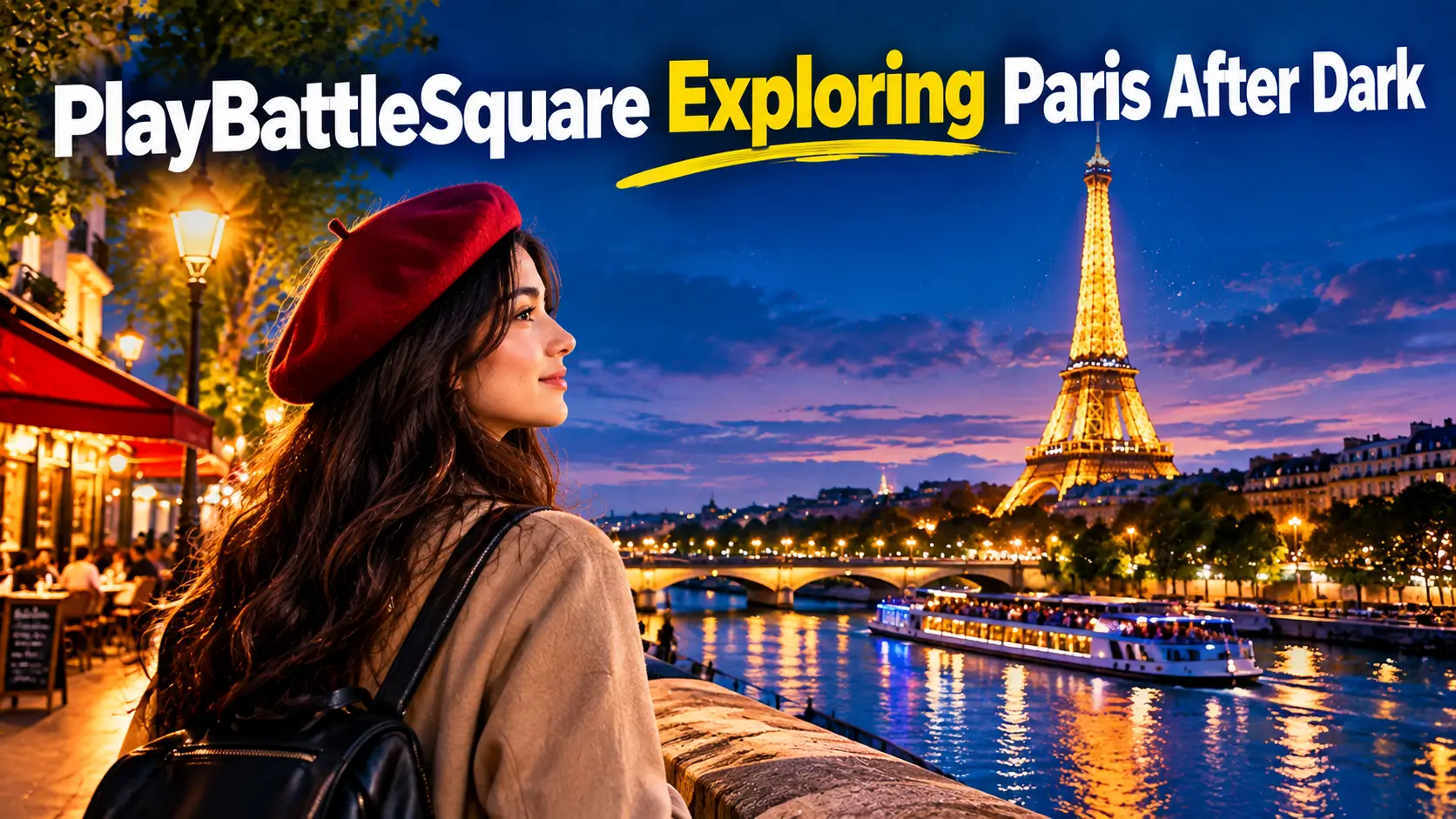

Experiencing Paris Beyond Daytime Sightseeing
PlayBattleSquare Exploring Paris After Dark shows how Paris becomes beautiful after sunset, when the French capital takes on a completely different character through city lights and a magical nighttime atmosphere.
Historic buildings, illuminated landmarks, and the Seine create a special evening setting, while cafés become lively meeting places for travelers. Riverside walks, cultural activities, and nighttime cruises help you discover the city beyond traditional daytime sightseeing.
Paris can seem impossible to describe in words because its architecture, culture, and romance have inspired titles like City of Light, City of Love, Capital of Fashion, and City of Art. To truly experience and understand Paris, go beyond sightseeing, feel Paris, and explore its purest, authentic nighttime streets and riverside atmosphere.
What Makes Paris After Dark Worth Exploring?
Paris is often associated with famous landmarks and daytime sightseeing. However, the city can take on a different mood once evening arrives. Streets that seemed busy during the day can feel more atmospheric, while familiar buildings and public spaces can appear different under nighttime lighting.
This change in atmosphere is one of the main reasons to explore Paris after dark.
Nighttime exploration isn’t necessarily about finding completely unknown places. It can be about seeing familiar places differently. A landmark you’ve already visited during the day may create a new impression when surrounded by evening activity and lights.
The pace can also change. Instead of moving from one attraction to another, you can spend more time walking, observing, eating, or simply enjoying the surroundings.
Why Nighttime Paris Feels Different
The biggest difference is the atmosphere.
During the day, sightseeing often has a clear purpose. You may have tickets, planned attractions, specific opening times, and a route that takes you from one location to another.
After dark, the experience can become more flexible.
A walk along the Seine can become an activity by itself. A café can become a place to pause rather than simply somewhere to eat. A neighborhood can become interesting because of its streets and atmosphere rather than one specific attraction.
This creates a more relaxed style of exploration.
The destination still matters, but the journey between destinations becomes part of the experience.
The Best Areas to Explore in Paris at Night
Choosing the right areas can make nighttime exploration easier and more enjoyable. Paris contains many places that can work well for an evening adventure, but the most practical approach is to focus on areas that naturally fit together.
The Eiffel Tower and Trocadéro, the Seine, the Louvre area, Île de la Cité, Notre-Dame, and Montmartre each offer a different type of nighttime experience.
Eiffel Tower and Trocadéro
The Eiffel Tower is one of the most recognizable places to include in a Paris night adventure.
After dark, the landmark becomes part of the city’s nighttime visual experience. Its presence can provide a strong starting point for an evening focused on views, photography, and walking.
Trocadéro is also useful because it provides another perspective on the Eiffel Tower. Instead of simply approaching the landmark, visitors can take time to appreciate it from the surrounding area.
For travelers who want a classic Paris evening, the Eiffel Tower can serve as the main destination around which the rest of the night is planned.
You don’t necessarily need to build the entire evening around visiting the tower itself. You can also make the surrounding area part of a broader nighttime walk.
The Seine and Riverside Walks
The Seine is another natural part of an evening itinerary.
The river connects many important areas of Paris, making it useful for travelers who want to combine sightseeing with walking. Rather than moving directly from one attraction to another, you can use the riverside as part of the journey.
At night, the river adds another layer to the city experience.
Bridges, buildings, and surrounding streets become part of the view, while walking beside the water provides a slower alternative to a tightly scheduled sightseeing route.
A Seine walk can also be combined with other activities. You could begin near a major landmark, continue toward the river, walk for a while, and then stop at a café or restaurant.
Louvre and the Surrounding Streets
The Louvre area offers another way to experience central Paris after dark.
The museum itself may be an important part of a visitor’s plans, but the surrounding area also deserves attention. The architecture and streets around a major landmark can become part of the evening experience.
If the Louvre is included in your plans, it helps to decide whether your priority is visiting the attraction or exploring the surrounding area.
Trying to do everything in one evening can make the experience feel rushed.
Instead, choose your main purpose and allow the surrounding streets to fill the rest of the route. This approach keeps the evening simple while still giving you opportunities to discover more of central Paris.
Île de la Cité and Notre-Dame
Île de la Cité provides a historic setting for an evening walk.
The area around Notre-Dame and the Seine offers a combination of architecture, river views, and historic surroundings. It can therefore work particularly well for travelers who prefer walking and observation over a packed schedule.
Rather than treating Notre-Dame as an isolated stop, consider the wider area.
Walk around the surrounding streets, take in the river, and use the location as one part of a broader nighttime route.
This creates a more complete experience than simply arriving, taking a photograph, and immediately leaving for another attraction.
Montmartre After Sunset
Montmartre offers a different atmosphere from the major landmarks in central Paris.
Its streets provide opportunities for slower exploration, while the area’s cafés, viewpoints, and distinctive surroundings can make it a strong choice for a nighttime adventure.
Sacré-Cœur is an important landmark within the area, but Montmartre isn’t only about one destination.
The neighborhood is best approached as a place to explore.
Take time to walk through its streets, look around, and enjoy the change of pace. This is particularly suitable for travelers who prefer discovering a neighborhood rather than following a strict attraction-by-attraction itinerary.
Things to Do in Paris After Dark
A Paris night doesn’t need to revolve around one activity.
You can combine several simple experiences to create an evening that feels varied without becoming complicated.
Take an Evening Walk
Walking is one of the simplest ways to explore Paris after dark.
It allows you to move at your own pace and notice details that can easily be missed when traveling quickly between destinations.
An evening walk can include famous landmarks, historic streets, bridges, cafés, and riverside areas. The route doesn’t need to be extremely long.
In fact, a shorter walk can often be more enjoyable because it leaves room for stops and unexpected discoveries.
When planning a route, think about connections rather than individual attractions.
Instead of asking which five places you can visit, ask which two or three places can naturally become part of one walk.
Take a Seine Night Cruise
A Seine night cruise offers another way to experience Paris after dark.
The river provides a different perspective from walking through the streets. Instead of viewing the city from ground level, you can experience the surrounding landmarks and nighttime scenery from the water.
A cruise can also provide a slower part of the evening.
After walking through busy areas, sitting back and taking in the surroundings can give the night a different rhythm.
If you plan to include a cruise, make it part of the overall itinerary rather than adding it at the last moment. The rest of your evening can then be arranged around that experience.
Enjoy a Parisian Café
Cafés are a natural part of an evening in Paris.
A café stop gives you an opportunity to rest, enjoy food or a drink, and watch the activity around you.
It can also divide your evening into manageable sections.
For example, you might begin with sightseeing, spend time walking through a neighborhood, stop at a café, and then continue exploring afterward.
The café doesn’t have to be a major destination.
Sometimes the value comes from simply having a comfortable place to pause and enjoy the atmosphere.
Explore Evening Cultural Activities
Nighttime exploration can also include cultural experiences.
Depending on your plans, you may want to include an evening activity connected to art, entertainment, or local culture.
The important thing is to choose activities that fit naturally into your route.
A cultural activity with a fixed schedule requires more planning than an evening walk, so leave enough room around it. This prevents the rest of the night from becoming rushed.
A balanced evening can combine one scheduled activity with more flexible experiences such as walking, dining, or exploring a neighborhood.
A Practical Paris After-Dark Itinerary
A simple itinerary can help you experience several sides of Paris without turning the evening into a race.
The following structure can be adapted to your interests:
| Part of the evening | Main activity | Purpose |
| Early evening | Major landmark | Start with a clear destination |
| Next | Evening walk | Explore the surrounding area |
| Middle of the evening | Seine experience | Add a different perspective |
| Later | Café or meal | Rest and enjoy the atmosphere |
| Final part | Neighborhood walk | End the evening at a relaxed pace |
Start With a Major Landmark
Begin with one place that you genuinely want to see.
The Eiffel Tower, Louvre area, Notre-Dame, or another major destination can provide a clear starting point.
Starting with a main attraction also gives you flexibility. Once you’ve experienced the most important part of the evening, you can decide how much more exploration you want to do.
Continue With a Walk
After the first destination, walk through the surrounding area rather than immediately moving to another distant attraction.
This is where the nighttime atmosphere becomes more noticeable.
Take photographs, explore streets, observe the surroundings, and allow yourself time to stop.
The goal isn’t to cover the maximum possible distance. The goal is to experience the route.
Add the Seine to the Evening
If your route allows, include the Seine as a central part of the night.
You can walk beside the river or include a night cruise.
The river can connect different parts of the evening while also giving you a chance to slow down.
Finish With a Café or Meal
A café or meal can provide a natural ending to the sightseeing portion of the night.
Instead of continuing until you’re exhausted, use this point to relax.
If you still want to explore afterward, a short neighborhood walk can finish the evening without requiring another major destination.
Getting Around Paris at Night
Transportation is an important part of any nighttime plan.
You don’t need to create a complicated transportation schedule, but you should know how you intend to move between major parts of your route.
Transportation Options at a Glance
| Option | Best for | Main consideration |
| Walking | Nearby attractions and neighborhoods | Consider distance and comfort |
| Metro | Longer movement between areas | Check the evening schedule |
| Taxi or ride service | Direct travel | Useful when walking or public transport isn’t practical |
| Seine cruise | Sightseeing from the river | Plan around the cruise schedule |
Walking is often the most natural option when attractions are close together.
Public transportation can make sense when you need to cover more distance. For a later evening, having a backup transportation option can make the plan more comfortable.
The most important thing is to avoid leaving transportation decisions until the very end of the night.
Staying Safe and Comfortable After Dark
Nighttime exploration should be enjoyable, but comfort and awareness still matter.
A little preparation can make a significant difference.
Keep your important belongings secure and stay aware of your surroundings, particularly in crowded areas. If you’re using your phone for navigation, check your route before you begin walking rather than spending the entire journey focused on your screen.
A few practical habits can help:
- Keep valuable belongings secure.
- Avoid carrying unnecessary items.
- Keep your phone charged.
- Know where you’re going before starting a long walk.
- Stay aware of your surroundings.
- Choose routes that feel comfortable.
- Keep transportation options in mind.
- Don’t allow a packed itinerary to force you into unnecessary late-night travel.
- If you’re traveling with others, stay connected throughout the evening.
- Give yourself enough time to return to your accommodation comfortably.
Comfort is just as important as safety.
Paris exploration can involve a lot of walking, so comfortable footwear can make a long evening much easier. Weather can also affect the experience, making suitable clothing useful when you’re spending several hours outdoors.
How to Plan Your Paris Nighttime Adventure
Good planning doesn’t mean scheduling every minute.
Instead, identify the important parts of the evening and leave room for spontaneous exploration.
Choose Your Main Experience First
Start by deciding what you want the evening to feel like.
You might want:
- Landmark photography
- A romantic evening walk
- A relaxed café experience
- A Seine cruise
- Neighborhood exploration
- Cultural activities
- A combination of sightseeing and dining
Once you know your priority, the rest becomes easier.
If the Eiffel Tower is the main goal, plan around that location. If you prefer neighborhood exploration, choose an area such as Montmartre and allow more time for walking.
Group Nearby Attractions Together
Avoid building an itinerary that repeatedly sends you across the city.
Instead, choose attractions that can be combined naturally.
For example, a landmark can lead into a walk, the walk can lead to the Seine, and the evening can finish at a café.
This creates a smoother experience.
It also gives you more time to enjoy each location instead of spending the evening moving between them.
Check Hours and Schedules
Evening activities can have specific operating schedules.
Before leaving, make sure the places you want to visit are available during the period you plan to go.
This is particularly important when your itinerary includes a scheduled activity.
If something has a fixed starting time, build the rest of the evening around it.
Pack for Walking
Keep your evening setup simple.
Comfortable shoes, suitable clothing, your phone, essential personal items, and anything needed for your planned activities are usually more practical than carrying a large bag.
The lighter you travel, the easier it is to move through streets, cafés, and public spaces.
How Exploring Paris at Night Changes the Experience
One of the most interesting aspects of nighttime exploration is that the city itself becomes part of the activity.
During a conventional sightseeing day, the main attraction often receives most of your attention.
At night, the spaces between attractions can become equally important.
A bridge can become a viewpoint.
A riverside walk can become a memorable part of the evening.
A café can become a place to pause and observe.
A quiet street can provide a completely different impression from a crowded daytime attraction.
This makes nighttime exploration less about collecting destinations and more about experiencing the city.
The same landmark can also feel different depending on how you reach it.
Arriving after an evening walk creates a different experience from arriving directly by transportation. Spending time around a landmark rather than simply taking a photograph can also make the visit feel more personal.
This is why a flexible itinerary works so well for Paris after dark.
PlayBattleSquare’s Perspective on Exploring Paris After Dark
The PlayBattleSquare approach to Paris after dark centers on the idea of nighttime discovery.
Rather than presenting the city only through its most famous attractions, the concept gives attention to hidden streets, late cafés, quiet moments, illuminated landmarks, and evening walks.
This creates a broader understanding of what nighttime exploration can mean.
You don’t need to find a completely unknown location for the experience to feel new. Sometimes, changing the time of day is enough to change your perspective.
A familiar street can look different.
A landmark can create a different impression.
A café can become more inviting after a long walk.
The Seine can become a central part of an evening instead of simply something you pass during daytime sightseeing.
This perspective also encourages travelers to avoid rushing.
A good nighttime adventure isn’t measured by the number of places visited. It’s measured by how naturally the evening comes together.
Building a Night Route Around Different Traveler Styles
Different travelers can approach the same city in very different ways.
For Landmark Lovers
Focus on major locations such as the Eiffel Tower, Trocadéro, Louvre area, and Notre-Dame.
Choose a small number of landmarks rather than trying to visit everything.
Allow time to stop and appreciate each location.
For Walkers
Build the evening around a continuous route.
Use the Seine and historic neighborhoods as natural connections between destinations.
Keep the route manageable so the walk remains enjoyable.
For Café and Food Lovers
Choose a neighborhood first and make the evening about atmosphere, food, and relaxed exploration.
Use sightseeing as something that happens naturally around the meal rather than making every part of the night a formal attraction.
For First-Time Visitors
Start with one iconic landmark.
Then add a walk, a Seine experience, and a café or meal.
This gives you a balanced introduction without creating an overwhelming schedule.
For Repeat Visitors
Move beyond the most obvious attractions.
Explore neighborhoods, quieter streets, cafés, riverside areas, and different viewpoints.
The goal is to experience a familiar city from a different perspective.
What Makes a Good Nighttime Paris Plan?
A successful evening doesn’t require a complicated itinerary.
It needs a clear starting point, a practical route, enough time to enjoy each stop, and a comfortable way to return at the end of the night.
Try to avoid these common planning mistakes:
- Adding too many distant attractions.
- Spending more time traveling than exploring.
- Treating every stop as mandatory.
- Forgetting to allow time for meals or breaks.
- Ignoring transportation when planning a late evening.
- Rushing through neighborhoods.
- Carrying too much during a long walking route.
Instead, choose a few experiences that work well together.
A strong combination could be a major landmark, an evening walk, a Seine experience, and a café. Another traveler might prefer Montmartre, a meal, and a relaxed neighborhood walk.
There isn’t one perfect route.
The better approach is to create an evening that matches your interests and available time.
FAQs
Q1. What makes Paris special after dark?
Paris takes on a different character after sunset, with illuminated landmarks, lively cafés, and beautiful riverside views creating a memorable nighttime atmosphere.
Q2. What can travelers do in Paris at night?
Travelers can enjoy riverside walks, cultural activities, cafés, illuminated landmarks, and nighttime cruises.
Q3. Why is Paris called the City of Light?
Paris is widely known as the City of Light because of its long association with enlightenment, culture, and its illuminated streets and landmarks.
Q4. Is exploring Paris after dark different from daytime sightseeing?
Yes. Nighttime brings a quieter atmosphere, glowing architecture, lively meeting places, and a different way to experience familiar streets.
Q5. What are good places to experience Paris at night?
The Seine, riverside areas, cafés, historic streets, and areas around illuminated landmarks offer different nighttime experiences.
Q6. What makes Paris known as the City of Love?
Paris has a long-standing reputation for romance, influenced by its architecture, atmosphere, culture, and associations with romantic experiences.
Q7. How can visitors experience authentic Paris at night?
Visitors can slow down, explore nighttime streets, enjoy local cafés, take riverside walks, and focus on the city beyond traditional sightseeing.
Conclusion
Exploring Paris after dark gives travelers a different way to experience the French capital. From glowing historic buildings and the Seine to lively cafés, riverside walks, and nighttime cruises, the city offers plenty to enjoy after sunset. A slower evening pace also makes it easier to notice Paris’s architecture, culture, and romantic atmosphere beyond traditional sightseeing.
