

Food Packaging That Builds a Memorable Cookie Brand
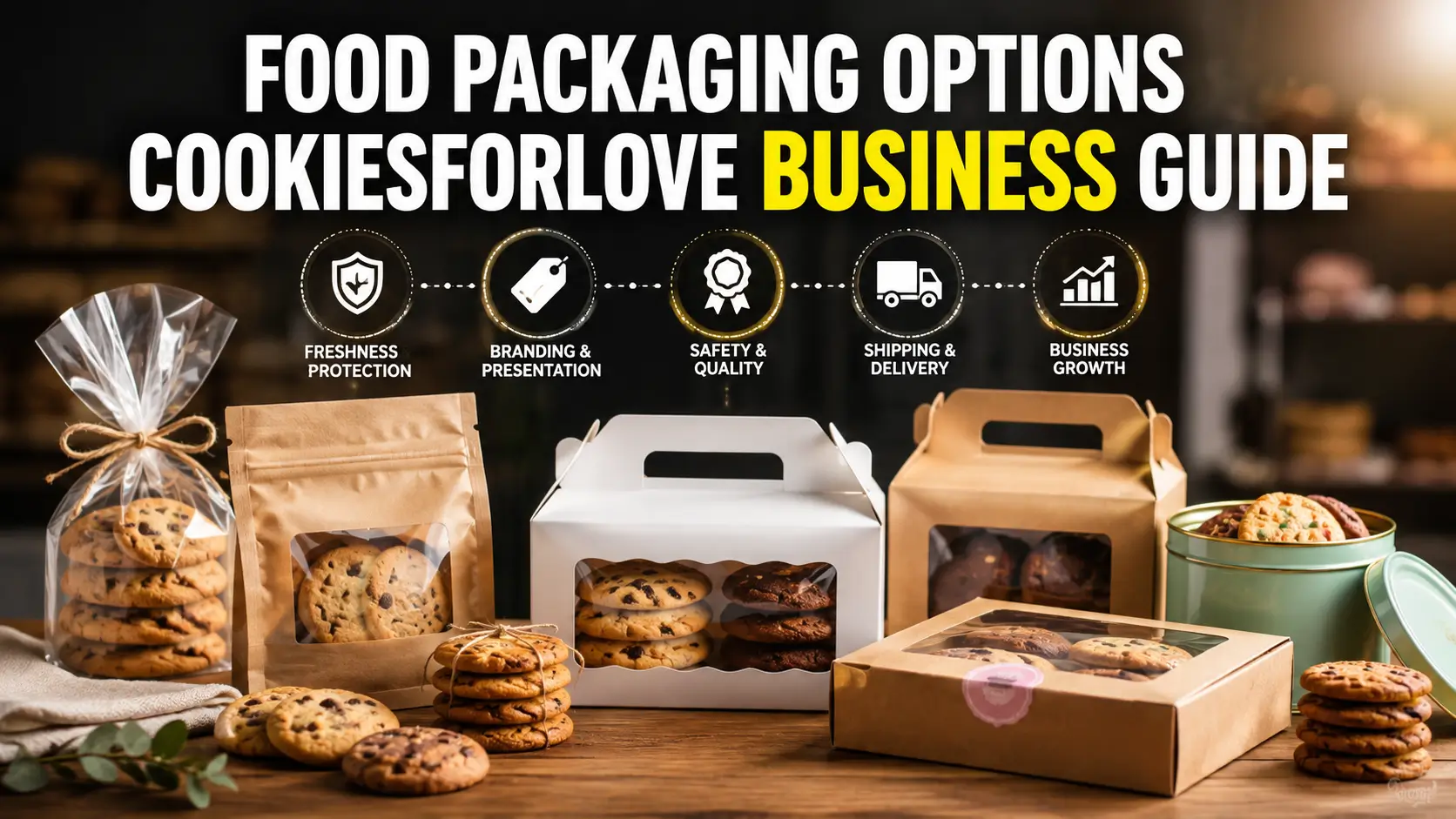
The Food Packaging Options Cookiesforlove Business Guide explains how smart packaging protects cookies, preserves freshness, and improves customer trust.
For a cookie business, the right food packaging should protect fragile products during transportation and storage while keeping the appearance attractive. Custom cookie packaging, including boxes, sleeves, and labels, can support brand promotion through clear logos, colors, and designs. This improves brand recognition, product presentation, and the overall customer experience. Bakery owners, food entrepreneurs, and growing brands should match packaging with their target audience, product fit, and growth goals.
Good packaging selection also considers product safety, packaging quality, and packaging performance. Food-safe packaging can help maintain product integrity, while protective packaging reduces product damage and possible product returns. A clear packaging strategy can strengthen brand reputation, support customer retention, and encourage repeat customers and sales growth.
What Makes Cookie Packaging Different From General Food Packaging?
Cookies seem simple to package, but their texture creates several packaging challenges. Moisture, oxygen, grease, heat, crushing, and contamination can all affect the finished product.
A crisp cookie needs protection from moisture because absorbed humidity can soften its texture. A soft cookie may need packaging that prevents excessive moisture loss. Cookies containing chocolate, cream, caramel, or other fillings can create additional concerns.
Packaging also performs more than one job. The inner package protects the food, while the outer package may protect the inner package during storage and shipping.
For example, a bakery might place individual cookies inside food-safe bags and then arrange them inside a rigid gift box. An online order may then require a shipping carton around that box.
This creates three practical packaging layers:
| Packaging layer | Main purpose |
| Primary packaging | Directly contains and protects the cookie |
| Secondary packaging | Groups cookies and improves presentation |
| Shipping packaging | Protects the order during transportation |
A successful cookie business considers all three instead of treating packaging as one product.
Start With the Cookie: Match Packaging to the Product
The cookie itself should determine the starting point for your packaging decision. Don’t select a package simply because another bakery uses it.
Crisp and Crunchy Cookies
Crisp cookies are particularly sensitive to moisture. When they absorb moisture from the surrounding environment, their texture can change.
For these products, look for packaging with suitable moisture-barrier properties. A simple paper bag may provide an attractive presentation, but it may not offer enough protection for long storage.
Common options include:
- Barrier pouches
- Heat-sealed bags
- Plastic food bags
- Foil-lined structures
- Rigid containers with suitable inner packaging
- Paper bags combined with an inner barrier
The correct solution depends on the intended shelf life and storage conditions.
Soft, Chewy, and Filled Cookies
Soft cookies have a different challenge. You may want to preserve their intended texture rather than simply keeping outside moisture away.
Filled cookies also require careful consideration because oils, creams, chocolate, and sticky fillings can interact with packaging materials.
Packaging should:
- Prevent unnecessary product movement
- Resist grease where required
- Protect the surface and decoration
- Provide an appropriate moisture barrier
- Remain intact during handling
A soft cookie that sticks to its wrapper isn’t a successful packaging experience, even if the package looks attractive.
Decorated and Delicate Cookies
Decorated sugar cookies, iced cookies, and intricate designs need physical protection as much as freshness protection.
A flexible bag alone may not prevent decorations from being scratched or broken. Individual compartments, trays, inserts, or rigid boxes can provide additional protection.
For premium decorated cookies, consider:
- Individual sleeves
- Clear bags
- Cardboard inserts
- Molded trays
- Window boxes
- Rigid gift boxes
The package should hold the cookie securely without pressing against its decorated surface.
Assorted Cookie Collections
Mixed cookie boxes create another consideration: different cookies may have different moisture and aroma characteristics.
Strongly flavored cookies can sometimes affect the sensory experience of neighboring products. Different textures may also respond differently to the same packaging environment.
For assorted collections, consider separating cookies with:
- Individual wrappers
- Paper cups
- Dividers
- Inserts
- Separate inner bags
This approach can also make the box look more organized.
The Main Food Packaging Options for Cookies
There is no single best package for every cookie business. Each format has strengths and limitations.
Paper and Kraft Cookie Bags
Paper and kraft bags offer a natural bakery aesthetic. They’re especially useful when visual simplicity and brand character matter.
They work well for short-term presentation and products that don’t require a strong moisture or oxygen barrier from the outer package.
However, ordinary paper doesn’t automatically provide the barrier properties required for every cookie. If freshness is critical, a food-safe inner liner or barrier layer may be necessary.
Best suited for:
- Local bakery sales
- Farmers markets
- Short-term packaging
- Rustic or handmade branding
- Cookies with lower barrier requirements
Clear Cellophane and Bakery Bags
Clear bags make the product part of the presentation. Customers can immediately see the cookie’s size, color, decoration, and condition.
They work particularly well for individually decorated cookies and small gift arrangements.
A clear package can also reduce the need for elaborate printed graphics because the product itself becomes a visual selling point.
Food-Grade Plastic Bags and Pouches
Food-grade plastic packaging offers flexibility and can provide useful barriers against moisture and outside exposure, depending on its construction.
Different plastic structures have different performance characteristics. Don’t assume every transparent plastic bag provides the same protection.
For cookie businesses, common formats include:
- Flat bags
- Gusseted bags
- Heat-sealable bags
- Resealable pouches
- Stand-up pouches
The package should match the cookie’s protection requirements rather than simply its appearance.
Stand-Up and Resealable Pouches
Resealable pouches offer convenience because customers can open the package and close it again.
They’re particularly practical for cookies sold in multiple-serving quantities.
Their advantages can include:
- Convenient opening and closing
- Strong shelf presence
- Efficient storage
- Space for labels
- Good branding potential
However, a resealable closure doesn’t automatically make a pouch airtight. The actual barrier and closure design still matter.
Bakery and Cookie Boxes
Boxes provide structure that flexible bags can’t always deliver.
A rigid or semi-rigid box can reduce crushing and create a more premium presentation. Window boxes also allow customers to see the product before purchasing.
Cookie boxes work particularly well for:
- Gift orders
- Assorted cookies
- Decorated cookies
- Corporate orders
- Bakery displays
- Special occasions
A box may still require an inner food-safe bag or liner when the cookies need additional protection.
Tin Cookie Containers
Tin containers are durable and reusable, which makes them popular for premium and gift-oriented cookies.
They also create a strong keepsake effect. Customers may continue using the container after eating the cookies.
However, tins add weight and can increase shipping costs. They may also require an inner food-safe layer rather than placing every product directly against the metal.
Glass and Rigid Containers
Glass provides excellent product visibility and a premium appearance. Yet its weight and breakage risk make it less practical for many shipping applications.
Rigid plastic or other durable containers can provide similar structural benefits with lower breakage risk.
These formats make the most sense when presentation, protection, and reuse justify their added cost or weight.
Packaging Materials: What Should Touch the Cookies?
The material directly touching your cookies deserves careful attention.
A package can look food-safe without being suitable for direct food contact. Cookie businesses should verify that the specific packaging product is intended for its planned food-contact use.
Food-Contact-Safe Materials
Primary packaging should be selected according to the food it will contact and the intended conditions of use.
Ask your supplier about:
- Food-contact suitability
- Material specifications
- Intended food applications
- Temperature limitations
- Grease resistance
- Barrier properties
- Available compliance documentation
Don’t rely solely on phrases such as “eco-friendly,” “premium,” or “food packaging.” The actual product specifications matter.
Barrier Properties
Barrier performance is one of the most important technical considerations in cookie packaging.
Different cookies require different levels of protection from:
- Water vapor
- Oxygen
- Grease
- Light
- External odors
A crisp cookie may need strong moisture protection. A chocolate-heavy product may benefit from packaging that limits exposure to oxygen and undesirable aromas.
The concept is simple: packaging should control the environmental factors that damage the specific cookie.
Liners, Inner Bags, and Protective Layers
Sometimes the best solution isn’t one material. It’s a combination.
For example, a decorative kraft box can provide branding and structure while an inner sealed bag provides the necessary product barrier.
This layered approach allows each component to perform a specific job:
- Inner package: freshness and food protection
- Box: structure and presentation
- Shipping carton: transportation protection
That can be more effective than forcing one package to solve every problem.
Cookie Packaging for Different Sales Channels
Your sales channel should influence the packaging format you choose.
Packaging for Local Bakery and Retail Sales
Local customers often handle products directly before buying them. Packaging should therefore provide product visibility while keeping the cookies protected.
Clear bags, window boxes, paper sleeves, and labeled pouches can work well.
The package should also stack or display efficiently if you sell through a retail counter.
Packaging for Farmers Markets and Pop-Up Sales
Farmers markets reward packaging that’s lightweight, practical, and easy to carry.
Good choices often include:
- Paper bags
- Clear bakery bags
- Simple boxes
- Stickers and labels
- Small resealable pouches
Avoid unnecessarily elaborate packaging if customers will consume the cookies soon after purchase.
Packaging for Gift Orders
Gift packaging should prioritize presentation and protection equally.
A customer buying a cookie gift isn’t purchasing only food. They’re purchasing an experience.
Consider:
- Rigid boxes
- Window lids
- Inserts
- Individual wrappers
- Decorative seals
- Branded tissue
- Seasonal labels
The package should still protect the cookies rather than becoming purely decorative.
Packaging for Online Cookie Orders
Online orders need more protection because you can’t control how the package is handled after it leaves your facility.
A practical setup may include:
Cookie → Primary package → Protective box → Shipping carton
Use inserts or dividers when cookies can collide with each other. Reduce empty space when movement could cause breakage.
For delicate products, the shipping package should be tested under realistic handling conditions before you scale up.
Packaging for Subscription and Bulk Orders
Subscription businesses benefit from consistent packaging dimensions.
Standardized sizes can simplify:
- Inventory management
- Packing procedures
- Storage
- Shipping calculations
- Labeling
- Staff training
Resealable pouches or standardized inner bags can also make recurring orders easier to fulfill.
Protecting Cookies During Storage, Handling, and Shipping
Packaging needs to protect the cookie throughout its entire journey.
Keeping Cookies Fresh
Freshness isn’t just about sealing the package. It depends on the interaction between the cookie, packaging material, seal, storage conditions, and time.
For example, a package with excellent material performance can still fail if the seal is weak.
Important factors include:
- Barrier material
- Seal quality
- Package size
- Headspace
- Storage temperature
- Humidity
- Product characteristics
For commercial products, businesses should validate packaging performance through appropriate shelf-life and quality testing rather than guessing.
Preventing Breakage
Breakage usually becomes a bigger problem when cookies have empty space around them.
A cookie moving repeatedly inside a large box can collide with other cookies or the package walls.
You can reduce this risk with:
- Correctly sized boxes
- Dividers
- Trays
- Inserts
- Paper cushioning
- Protective inner cartons
Right-sizing is often more useful than simply adding more cushioning.
Preventing Tampering and Contamination
Tamper-evident features can help show whether a package has been opened or disturbed.
Examples include:
- Tear strips
- Sealed bags
- Tamper-evident labels
- Breakable seals
- Specialized closures
A decorative sticker isn’t necessarily a tamper-evident feature. If tamper evidence matters, use packaging specifically designed for that purpose.
Choosing the Right Outer Shipping Box
The shipping carton has a different job from the cookie package.
The inner package protects the food. The shipping carton protects the overall shipment.
A good shipping carton should provide enough structure without creating excessive empty space.
Before committing to a format, test a packed order through realistic handling scenarios.
Cookie Packaging Branding That Actually Helps a Business
Packaging is one of the few marketing tools customers physically take home.
A strong package can reinforce your brand before the first bite.
Custom Printed Packaging
Custom printing can create a consistent identity across bags, boxes, sleeves, and pouches.
Useful elements include:
- Logo
- Brand colors
- Product name
- Short brand message
- Contact information where appropriate
- Social media handle where appropriate
- Product-specific labels
Custom printing usually makes more sense as order volume increases.
For a small business, professionally designed stickers may offer a lower-commitment alternative.
Labels, Stickers, Seals, and Tapes
You don’t need custom-printed bags to create recognizable packaging.
A simple kraft box combined with a distinctive label can look polished without requiring a large packaging investment.
This approach also makes seasonal changes easier. You can keep the base package consistent and change the sticker or sleeve.
Packaging Windows and Product Visibility
Windows can help customers judge the product before purchase.
They’re especially effective for:
- Decorated cookies
- Gift boxes
- Assorted cookies
- Specialty shapes
- Premium products
However, visibility shouldn’t compromise structural protection or the package’s barrier requirements.
Seasonal and Gift Packaging
Seasonal packaging can create excitement, but it shouldn’t overwhelm the core brand.
A practical strategy is to keep the main package consistent while changing smaller elements such as:
- Stickers
- Sleeves
- Cards
- Ribbon
- Printed inserts
This approach reduces inventory complexity.
Food Labeling and Packaging Compliance
Packaging decisions also involve food labeling and safety responsibilities.
Exact requirements vary by location, product type, and sales channel. A cookie sold directly at a local event may face different requirements from a packaged product distributed through retail stores.
Information Your Cookie Packaging May Need
Depending on the applicable rules, packaged cookies may require information such as:
- Product identity
- Ingredient list
- Allergen information
- Net quantity
- Business or manufacturer information
- Storage instructions when applicable
Never assume that attractive packaging replaces accurate labeling.
Food Safety and Allergen Considerations
Allergen information deserves special attention for cookie businesses because recipes commonly contain ingredients such as wheat, milk, eggs, soy, peanuts, or tree nuts.
The label should accurately reflect the product and applicable requirements.
Businesses should also consider cross-contact during production. Changing the package won’t solve a production-level allergen control problem.
Tamper-Evident Packaging
If your sales environment requires additional protection against unauthorized opening, select a packaging format designed for tamper evidence.
Document the packaging process so employees know how seals should look before products leave the facility.
Sustainable Food Packaging Options for Cookie Businesses
Sustainability has become an important packaging consideration, but environmental claims need precision.
A package isn’t automatically better for the environment simply because it uses paper.
Recyclable Packaging
Paperboard and certain plastic formats may be recyclable, but actual recycling depends on the material composition and local recycling infrastructure.
A package with multiple bonded materials can be more difficult to recycle than a simpler single-material structure.
Before making a recycling claim, check the packaging specifications and the disposal system relevant to your customers.
Compostable and Biodegradable Options
“Compostable” and “biodegradable” aren’t interchangeable terms.
Some compostable packaging requires industrial composting facilities rather than ordinary household composting.
That distinction matters. Customers need clear disposal information instead of vague environmental promises.
Reusable Packaging
Tins and rigid containers can support reuse.
However, reuse only provides meaningful value when customers actually reuse the package and the package can withstand repeated use.
For premium cookie businesses, a reusable container can also become part of the product experience.
Reducing Packaging Waste
The simplest sustainability improvement is often using only what the product actually needs.
Consider:
- Right-sizing packages
- Removing unnecessary layers
- Choosing efficient box dimensions
- Reducing excess void space
- Using reusable formats where practical
- Selecting materials with realistic end-of-life options
The strongest packaging strategy balances environmental goals with product protection.
How Much Does Cookie Packaging Cost?
Packaging cost depends heavily on the format and purchase quantity.
A simple bag with a sticker may cost much less per unit than a custom-printed rigid box with inserts.
Factors That Affect Packaging Cost
The major cost drivers include:
| Factor | How it affects cost |
| Material | Different materials have different production costs |
| Size | Larger packages generally require more material |
| Printing | Custom graphics can increase production costs |
| Closures | Zippers, seals, and specialty closures add components |
| Inserts | Dividers and trays increase material use |
| Order quantity | Larger runs can reduce unit costs |
| Custom tooling | Some custom formats require additional setup |
| Shipping | Bulky packaging can raise freight and storage costs |
Ready-Made vs. Custom Packaging
Ready-made packaging usually offers a simpler starting point.
It lets you test a format before committing significant money to custom production.
Custom packaging becomes more attractive when:
- Your sales volume is consistent
- Brand presentation is a major selling point
- Standard sizes don’t fit your products
- You need specialized features
- You can justify larger order quantities
Small Orders vs. Wholesale Quantities
Buying in bulk can reduce unit pricing, but it also creates an inventory commitment.
Don’t order thousands of packages simply because the per-unit price looks attractive.
First test:
- Product fit
- Seal performance
- Customer presentation
- Shipping durability
- Storage requirements
- Actual usage rate
A cheaper package isn’t economical if half of the inventory becomes obsolete.
Quality vs. Cost
The cheapest package can become expensive when it causes broken or stale products.
Think about packaging as part of the cost of delivering a satisfactory product, not simply as an expense.
How to Choose the Right Cookie Packaging Supplier
The supplier matters almost as much as the packaging itself.
What to Check Before Ordering
Ask suppliers about:
- Food-contact suitability
- Material construction
- Available sizes
- Minimum order quantities
- Printing options
- Custom dimensions
- Sample availability
- Production timelines
- Shipping arrangements
- Compliance documentation
A reputable supplier should be able to provide clear specifications for commercial packaging products.
Requesting Samples
Samples can reveal problems that product photographs never show.
Test the actual package with your cookies.
Check whether:
- The cookie fits comfortably
- The seal works correctly
- The material handles grease
- The box closes properly
- The package survives normal handling
- Labels adhere correctly
- The finished product looks professional
Questions to Ask a Packaging Supplier
Before placing a large order, ask:
- What material is this package made from?
- Is it suitable for direct food contact?
- What barrier properties does it provide?
- What sizes are available?
- What is the minimum order quantity?
- Can I order samples first?
- What printing options are available?
- How long will production take?
- How should the packaging be stored?
Clear answers make supplier comparisons much easier.
A Practical Cookie Packaging Selection Process
If you’re overwhelmed by options, use a simple decision process.
Step 1: Identify the Cookie Type
Determine whether your product is crisp, soft, chewy, filled, decorated, or assorted.
Step 2: Define Freshness and Protection Needs
Identify the main threats:
- Moisture
- Oxygen
- Grease
- Crushing
- Light
- Odors
- Temperature
Step 3: Choose the Primary Food-Contact Package
Select the bag, pouch, wrapper, tray, or inner container that directly protects the cookies.
Step 4: Select Branding and Presentation Features
Decide whether you need:
- Window
- Custom printing
- Stickers
- Sleeves
- Seals
- Inserts
- Gift finishing
Step 5: Add Protective Shipping Packaging When Needed
Online orders generally need more structural protection than local counter sales.
Step 6: Compare Cost, Sustainability, and Supplier Requirements
Only compare prices after confirming that the packages provide similar functions.
Cookie Packaging Options at a Glance
| Packaging type | Protection | Visibility | Branding | Best use |
| Kraft bag | Low to moderate | Low | High | Local bakery sales |
| Clear bakery bag | Moderate | High | Moderate | Individual cookies |
| Plastic pouch | Moderate to high | Varies | High | Retail and multi-cookie packs |
| Resealable pouch | Moderate to high | Varies | High | Repeat-use products |
| Window box | Moderate to high | High | High | Gifts and displays |
| Rigid cookie box | High | Low to moderate | High | Delicate or premium cookies |
| Tin | High | Low | High | Gifts and reusable packaging |
| Glass container | High | High | High | Premium local presentation |
| Shipping carton | Structural | Low | Moderate | Online orders |
These are general comparisons. Actual performance depends on the specific material, construction, closure, and product.
Common Mistakes Cookie Businesses Should Avoid
Small packaging decisions can create surprisingly large problems.
Choosing packaging based only on appearance is one of the most common mistakes. A beautiful box doesn’t help if the cookies lose their texture.
Other mistakes include:
- Using packaging without confirming food-contact suitability
- Ignoring moisture protection
- Choosing oversized boxes
- Leaving excessive empty space during shipping
- Ordering bulk quantities before testing samples
- Using fragile packaging for long-distance shipping
- Making vague sustainability claims
- Forgetting required product information
- Using the same packaging for every cookie type
- Treating decorative seals as tamper-evident protection
A better strategy is to test the packaging under the conditions your customers will actually experience.
Frequently Asked Questions
Q1.What is the best packaging for cookies?
The best packaging depends on the cookie type and freshness needs. Bags, pouches, boxes, and sealed wrappers can all work when properly matched to the product.
Q2.Does packaging keep cookies fresh?
Yes, suitable packaging can help protect cookies from moisture, air, and contamination. The right material and seal are important for maintaining texture and freshness.
Q3.Are cookie boxes better than bags?
Cookie boxes provide more structure and protection, while bags are lighter and often more affordable. The better option depends on the cookie and sales method.
Q4.What is custom cookie packaging?
Custom cookie packaging is designed with specific sizes, shapes, branding, or features for a business. It can include printed boxes, bags, sleeves, and branded labels.
Q5.Why is food-safe packaging important?
Food-safe packaging is designed for appropriate contact with food. It helps protect cookies from contamination and supports safe product handling.
Q6.How can packaging improve cookie branding?
Packaging can display your logo, colors, designs, and brand identity. Consistent packaging helps customers recognize your business and remember your products.
Q7.What packaging is best for shipping cookies?
Shipping cookies usually need strong primary packaging plus protective outer packaging. Boxes, inserts, dividers, and suitable shipping cartons can help prevent breakage.
Q8.Is eco-friendly cookie packaging a good choice?
Eco-friendly options can reduce packaging impact when chosen carefully. Consider recyclability, compostability, reusability, and the actual disposal options available to customers.
Q9.How can cookie businesses reduce packaging costs?
Businesses can compare ready-made and custom options, choose suitable package sizes, and buy reasonable quantities. Avoiding excessive packaging can also reduce material and shipping costs.
Q10.What should businesses consider before choosing cookie packaging?
Consider freshness, product protection, food safety, presentation, branding, transportation, storage, cost, and customer needs before selecting a packaging format.
Conclusion
The right food packaging does more than protect cookies. It supports freshness, product safety, presentation, brand identity, and customer trust. For a growing cookie business, choosing suitable boxes, sleeves, bags, labels, or custom packaging can reduce damage while making products look more professional. Focus on the cookie type, target audience, storage needs, transportation, budget, and branding before making a final packaging choice.
