
A Clear Introduction to the Latest AlienSync Updates
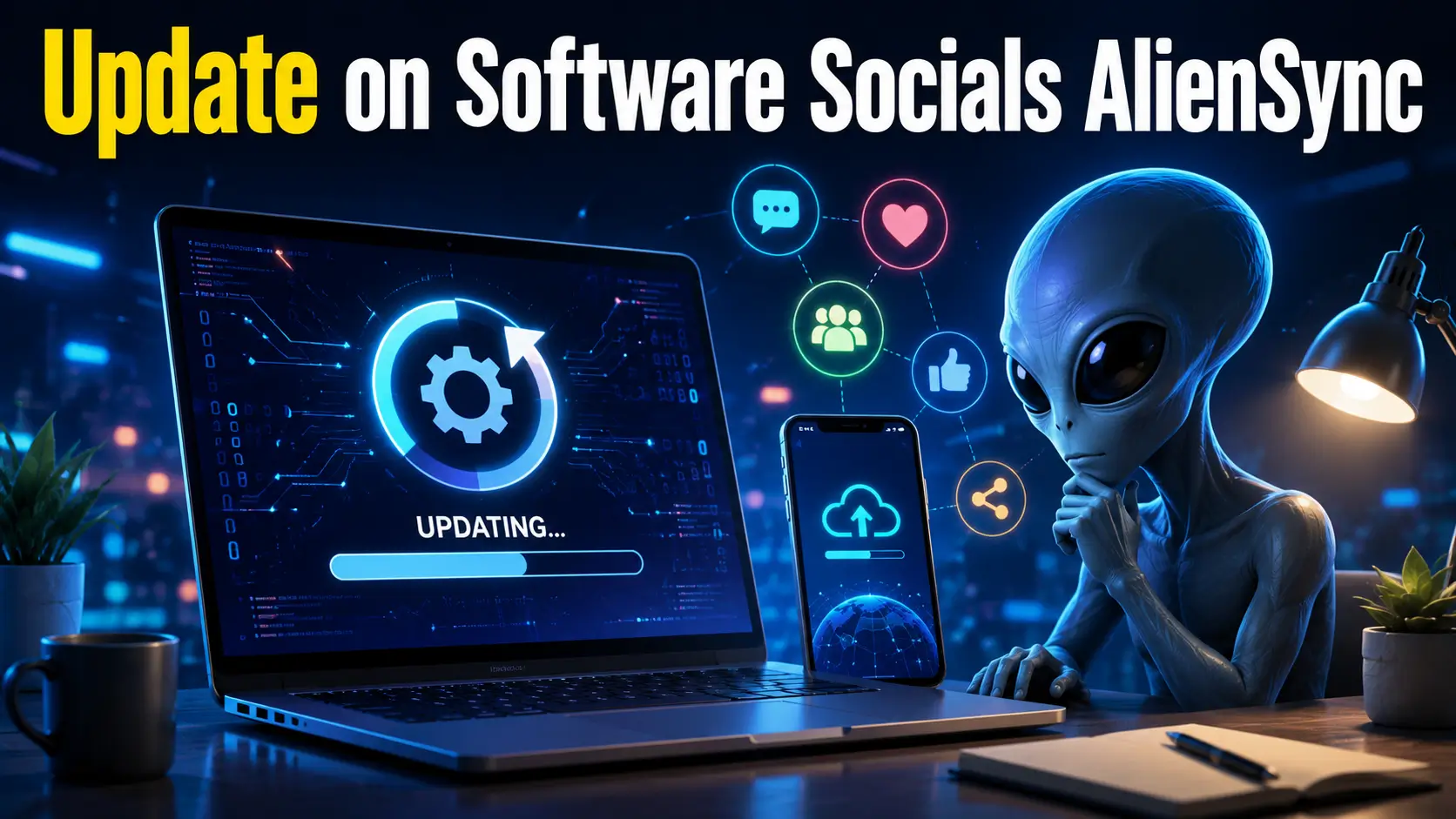
The Update on Software Socials AlienSync helps users review social media accounts, software, and platform changes with clear, useful current information. Managing multiple apps can make a content operation harder for a brand or agency, especially when socials require regular updates.
For social media management and content management, users should check software updates, latest updates, and technology details instead of trusting outdated or vague articles, ads, or advertising. A useful guide should remain clear, honest, and focused on real users.
For platform evaluation, consider the software stack, digital tools, workflow, and content workflow. Strong account management, social platforms, brand management, and agency management depend on a reliable software ecosystem. Platform adoption should reflect the current platform, software functionality, and practical use, including daily publishing, organization, and the wider technology workflow.
What Is AlienSync?
AlienSync currently appears in two closely related forms.
The first is AlienSync.com as a technology content platform. Its current site publishes material about software, apps, social platforms, cryptocurrency, and technology developments. The site describes itself as a place for technology coverage rather than presenting a conventional software product catalog.
The second is the AlienSync synchronization concept discussed across its recent content.
That concept describes a system capable of connecting applications, social accounts, data sources, and workflows. The proposed model uses connectors, APIs, events, rules, and synchronization logic to move information between different services.
This creates the central issue with AlienSync in 2026: the conceptual framework is described in much greater detail than the publicly verified product infrastructure.
A recent AlienSync article makes this limitation explicit. It says the platform is better understood as an editorial brand and conceptual synchronization framework rather than a clearly documented downloadable product. It also states that public SDKs and documented APIs have not been confirmed.
That doesn’t make the concept useless. It simply means readers need to distinguish between what AlienSync describes and what can independently be verified as a functioning commercial product.
The Two Meanings Behind the Name
| Area | What current information indicates |
| AlienSync.com | Technology and software-focused editorial platform |
| Socials and software concept | Framework for connecting apps, social platforms, and workflows |
| Automation | Described as part of the synchronization model |
| Social integrations | Discussed extensively, but individual integrations should be verified |
| Public API | No confirmed public documentation found |
| Public SDK | No confirmed public SDK found |
| Product dashboard | Described conceptually, but not established as a conventional public SaaS product |
| Pricing | No clearly verified standard product pricing structure |
| Main 2026 issue | Confusion between editorial content and a standalone software product |
This is the foundation for understanding every later update.
What Has Actually Changed in AlienSync?
The most important change in 2026 isn’t a traditional version release such as “AlienSync 4.0.” The public material does not provide a reliable conventional release history that supports such a timeline.
Instead, the major development is the expansion of AlienSync’s published material around apps, software, social media, synchronization, automation, and integration.
The current website contains a large collection of articles published or updated during July and August 2026. These include subjects such as creating an account, installing an alleged AlienSync app, connecting social media accounts, connecting applications, and understanding software integrations.
That publishing activity is real.
What remains less certain is whether every capability described in those articles corresponds to a publicly accessible, independently documented software product.
The Bigger Focus on Synchronization
Recent AlienSync material increasingly frames synchronization as the central idea.
The proposed workflow looks roughly like this:
Source event → synchronization layer → rules → destination action
For example, an application could generate an event. A synchronization system could interpret that event, apply a predefined rule, transform the data, and send an action to another service.
This is a legitimate software architecture pattern. Similar approaches appear throughout modern integration systems.
The important point is that describing such an architecture doesn’t automatically prove that AlienSync operates a production-grade implementation of it.
More Attention to Social Platforms
Recent articles also discuss connecting social accounts and managing information across multiple platforms.
One current AlienSync guide lists Instagram, TikTok, X, Facebook, LinkedIn, YouTube, and Pinterest as examples within its described social profile hub.
However, readers should treat these as described integrations rather than automatically verified live integrations.
That distinction is especially important for business users. A social network appearing in documentation or editorial content does not prove that an account can currently be connected through an operational AlienSync dashboard.
More Detailed Workflow Concepts
The current material also gives greater attention to workflow automation.
Examples include:
- New social activity triggering a business workflow.
- A social message becoming a potential CRM lead.
- Content events triggering actions in another application.
- Shared information being synchronized between systems.
- Analytics being collected across different channels.
- Brand information being maintained across multiple profiles.
These are useful examples of what an integration platform can accomplish. They also explain why synchronization remains the central theme surrounding AlienSync.
AlienSync and Social Media: What the Current Software Discussion Means
The phrase “socials and software” can sound like a specific product category, but it actually covers several separate functions.
A useful way to understand the current AlienSync model is to divide it into content, accounts, automation, data, and analytics.
Each area has different technical requirements.
Social Publishing and Scheduling
A genuine social management system needs more than a dashboard.
It normally requires authorized connections to individual social networks, permission handling, content preparation, scheduling infrastructure, publishing APIs, error handling, and account management.
AlienSync-related articles describe multi-platform scheduling and automated social publishing as part of the proposed system.
But there is an important caveat.
The current public material does not establish a conventional, fully documented API ecosystem comparable to established enterprise social management products. Therefore, claims about specific publishing capabilities should be checked before anyone relies on them operationally.
Social Account Synchronization
Account synchronization is broader than simply publishing posts.
A complete system could potentially manage:
- Profile information
- Bios
- Links
- Branding assets
- Content
- Messages
- Mentions
- Engagement data
- Account permissions
Recent AlienSync material describes a unified profile concept that could keep information such as bios, links, and branding consistent across multiple networks.
The concept makes sense from a workflow perspective.
For example, changing a company description once could theoretically update connected profiles instead of requiring a team member to edit every account separately.
The challenge is authorization. Each social platform controls what third-party applications can read or write. A synchronization system therefore depends heavily on the APIs and permissions made available by those platforms.
AlienSync Software Updates vs. Older Information
Older AlienSync articles often describe the service more confidently as a software platform.
A 2025 article, for example, presented AlienSync as a tool for bringing social platforms together and simplifying social media management.
Other 2025 material described AlienSync as an application and software suite designed to synchronize tasks, communication, and data.
More recent 2026 material is somewhat more nuanced.
Current articles acknowledge that AlienSync functions primarily as an editorial platform while presenting synchronization as a conceptual framework. One current article specifically warns that descriptions of APIs and integration architecture should not be treated as confirmed developer documentation.
That shift in framing is one of the most important developments to understand.
What Changed in the Public Narrative?
| Earlier descriptions | More recent 2026 framing |
| Often described as a software platform | More clearly described as an editorial platform plus synchronization concept |
| Strong claims about integrations | Greater emphasis on conceptual integration patterns |
| Software capabilities presented directly | Some capabilities are now qualified |
| Less attention to verification | Greater acknowledgement of missing public technical documentation |
| Product-like descriptions | More discussion of architecture and workflow ideas |
This doesn’t necessarily mean the underlying concept changed overnight.
It means the public description has become more nuanced, which is useful for readers trying to separate fact from marketing-style descriptions.
How the Latest AlienSync Information Affects Different Users
Not every reader needs the same level of verification.
Individual Social Media Users
For casual users, the biggest question is whether AlienSync provides a real, accessible way to manage social accounts.
If there is no clearly documented public product environment, users should avoid assuming that they can simply create an account, connect every social profile, and start scheduling posts.
The safer approach is to verify the exact product interface and current account process first.
Content Creators
Creators need dependable publishing workflows.
A creator managing five social networks may care about:
- One content calendar
- Cross-platform publishing
- Media formatting
- Scheduling
- Engagement tracking
- Analytics
- Account permissions
These are the same areas highlighted in AlienSync’s current conceptual material.
However, creators should test any claimed workflow with non-critical content before making it part of their regular publishing process.
Small Businesses
Businesses face a higher level of risk because social accounts can represent customer service, advertising, and brand identity.
A synchronization platform can theoretically reduce repetitive work.
For example, imagine a business receives a customer inquiry through Instagram. An automated workflow could theoretically create a CRM record and notify a sales representative.
That workflow is technically plausible.
The question is whether AlienSync itself currently provides the verified connectors required to perform it.
That distinction should guide purchasing decisions.
Teams and Agencies
Teams need more than basic scheduling.
They usually require permissions, account ownership, audit trails, collaboration, approval workflows, analytics, and predictable integrations.
AlienSync’s conceptual model includes collaboration, analytics, workflow automation, and identity management.
Still, a professional agency should not treat conceptual documentation as proof of enterprise readiness.
What You Should Check Before Using or Updating AlienSync
The safest approach is to verify the product before connecting valuable accounts.
Use this checklist:
- Confirm exactly which AlienSync product or website you are dealing with.
- Check whether the software has a functioning public dashboard.
- Verify whether account creation works as described.
- Confirm the current supported social platforms.
- Look for current integration documentation.
- Check whether an API or SDK is publicly documented.
- Review requested account permissions.
- Avoid uploading sensitive credentials directly.
- Test a connection with a low-risk account first.
- Confirm how account removal works.
- Check whether your data can be exported or deleted.
- Verify pricing before treating any feature as commercially available.
Security deserves special attention.
A system that connects social accounts and business applications potentially receives access to valuable information. Least-privilege permissions, credential rotation, access controls, and audit logs should therefore be standard expectations.
Current AlienSync material itself highlights these security principles when discussing the synchronization model.
AlienSync: Current Strengths and Limitations
The strongest part of AlienSync’s current public presence is its focus on explaining digital synchronization and integration concepts.
The material covers a wide range of topics, including apps, social platforms, workflows, automation, and technology trends.
The conceptual architecture is also easy to understand.
Instead of thinking about every application as an isolated island, the synchronization model treats applications as connected systems exchanging controlled information.
Where the AlienSync Concept Is Strong
The current material provides useful explanations around:
- Cross-platform workflow thinking
- Social and software integration
- Automation rules
- Data synchronization
- Identity consistency
- Analytics aggregation
- Workflow triggers
- Permission and security concepts
These ideas are relevant even when you aren’t using AlienSync.
They represent common principles behind modern integration architecture.
Where AlienSync Remains Limited
The biggest limitation is verification.
There is currently no strong public evidence establishing AlienSync as a conventional SaaS product with the complete technical footprint expected from a mature integration platform.
That includes concerns around:
- Public API documentation
- Public SDK availability
- Verified integration directories
- Clearly documented pricing
- A conventional product dashboard
- Independently verifiable production integrations
A separate 2026 investigation also reached a similar conclusion, noting the lack of concrete product documentation and distinguishing the AlienSync name from a clearly established software product.
Another recent guide similarly reported that it could not verify a public dashboard, pricing page, app-store listing, download portal, API documentation, or searchable integration directory.
Those limitations are more useful to readers than inflated feature lists.
AlienSync Compared With Established Social Media Software
A comparison becomes difficult when one side has a clearly documented commercial product and the other is primarily described through editorial and conceptual material.
Still, the comparison can reveal what users should evaluate.
| Factor | AlienSync current public picture | Established social management software |
| Social management concept | Yes | Yes |
| Workflow automation concept | Yes | Yes |
| Multi-platform publishing concept | Described | Commonly available |
| Public API documentation | Not clearly verified | Usually documented |
| Integration directory | Not clearly verified | Common |
| Transparent product pricing | Not clearly established | Usually available |
| Product documentation | Limited and mixed | Generally extensive |
| Enterprise workflow proof | Not clearly established | Often available |
| Best use today | Research and understanding the concept | Operational social management where verified |
The practical lesson is simple: don’t compare feature lists alone.
Check whether the feature actually exists in a usable product.
A dashboard screenshot, an article mentioning Instagram, or a conceptual workflow is not equivalent to a documented integration.
Common Problems After an AlienSync Update
Some problems may come from ordinary software changes. Others may come from misunderstanding what AlienSync actually provides.
Social Account Connection Problems
If a social account cannot connect, check whether the platform is actually supported.
Do not assume that a mention of Instagram, TikTok, X, Facebook, LinkedIn, YouTube, or Pinterest means an operational connector exists.
Missing Features
If an article describes a capability that you cannot find in the product environment, verify whether the article is describing:
- A current feature
- A planned feature
- A conceptual workflow
- A third-party integration
- A general example
This distinction can prevent a lot of wasted time.
Publishing Failures
If publishing appears available but fails, check authorization first.
Social platforms frequently restrict what third-party tools can publish, retrieve, or modify. Permissions can also expire or change.
Synchronization Conflicts
Synchronization systems can face conflicts when two systems modify the same information.
For example:
“System A changes the profile description while System B changes it five minutes later.”
A reliable integration needs clear conflict rules.
Possible approaches include:
- Last-write-wins
- Source-of-truth rules
- Manual approval
- Field-level ownership
- Version tracking
AlienSync’s current material discusses conflict handling but also notes that definitive guarantees around locking and offline behavior are not established.
That’s an important limitation for anyone considering automated synchronization.
How to Get the Most From the Current AlienSync Information
Even if you aren’t using AlienSync as a conventional software product, its synchronization model offers useful lessons.
Start by identifying your source of truth.
For example, if a business stores customer information in a CRM, that CRM should probably remain authoritative for customer records. Social media should not randomly overwrite those records.
Next, define specific triggers.
A good automation rule has a clear event, condition, and action.
For example:
Trigger: New customer message
Condition: Message contains a product inquiry
Action: Create a lead record
That structure is easier to test than vague automation such as “sync everything.”
Also, avoid excessive synchronization.
More connections don’t automatically create a better workflow. Every additional integration creates another point where permissions, formatting, outages, or conflicting data can cause problems.
What to Watch in Future AlienSync Updates
Future developments should be judged by evidence rather than by feature volume.
The most meaningful signs would include public technical documentation, clearly identified integrations, a stable product interface, transparent pricing, support information, and verifiable release notes.
Those would make it much easier to determine whether AlienSync has moved from a conceptual framework toward a conventional software product.
Social platform changes will also matter.
Every major network controls its own APIs and permissions. If a platform changes its publishing API, authentication system, or data-access rules, connected software must adapt.
That means any genuine social synchronization platform needs an active maintenance cycle.
For users, the strongest future update would not necessarily be an impressive new feature.
It would be greater transparency.
Clear documentation can tell users exactly what works, what doesn’t, which accounts are supported, what permissions are required, and what happens to their data.
AlienSync Update Checklist
Before treating a new AlienSync announcement as a real software update, check the following:
- Product identity: Is the announcement about AlienSync.com or an actual software product?
- Release evidence: Is there a genuine version or release announcement?
- Documentation: Are the new features documented?
- Availability: Can users actually access the feature?
- Integration proof: Is the named social network officially connected?
- Permissions: What access does the integration require?
- Security: How are credentials and user data handled?
- Pricing: Does the change introduce a paid feature?
- Compatibility: Does the update change supported systems?
- Support: Is there a clear method for reporting problems?
This checklist helps prevent one of the most common mistakes in technology research: treating an article describing a feature as proof that the feature is available.
Frequently Asked Questions
Q1.What is AlienSync?
AlienSync is associated with software, social platforms, and technology-focused content about connecting digital tools and workflows. Its current public information should be checked carefully before assuming specific features are available.
Q2.What does the latest AlienSync update include?
The latest information focuses on software, social media, integrations, synchronization, and workflow concepts. Users should verify specific features through current product information before using them.
Q3.Is AlienSync useful for social media management?
It may be useful for users interested in organizing social platforms and digital workflows. However, the value depends on which functions are actually available and supported.
Q4.Who can use AlienSync?
AlienSync-related tools and concepts may interest creators, brands, agencies, and users who manage multiple social accounts or digital applications.
Q5.Can AlienSync manage multiple social media accounts?
Current discussions around AlienSync describe multi-platform social management. However, users should verify the exact supported platforms and available account-management features before relying on them.
Q6.Should businesses use AlienSync?
Businesses should first evaluate its current functionality, integrations, security, workflow, and account-management options. Testing the platform before making it part of a critical business process is a sensible approach.
Q7.How should I evaluate an AlienSync update?
Check the release information, supported platforms, software functionality, permissions, pricing, compatibility, and practical benefits. Focus on verified changes rather than claims made in outdated or vague articles.
Conclusion
The Update on Software Socials AlienSync shows why users should look at practical software changes instead of relying on vague claims. AlienSync is connected with social media management, software, social platforms, and workflow ideas. However, users should verify current features, integrations, and availability before depending on the platform for important work.For brands, agencies, and creators, the best approach is simple. Check the latest information, test important functions, review account permissions, and see whether AlienSync fits the existing software stack. A useful platform should make daily tasks easier without creating new workflow problems.
