
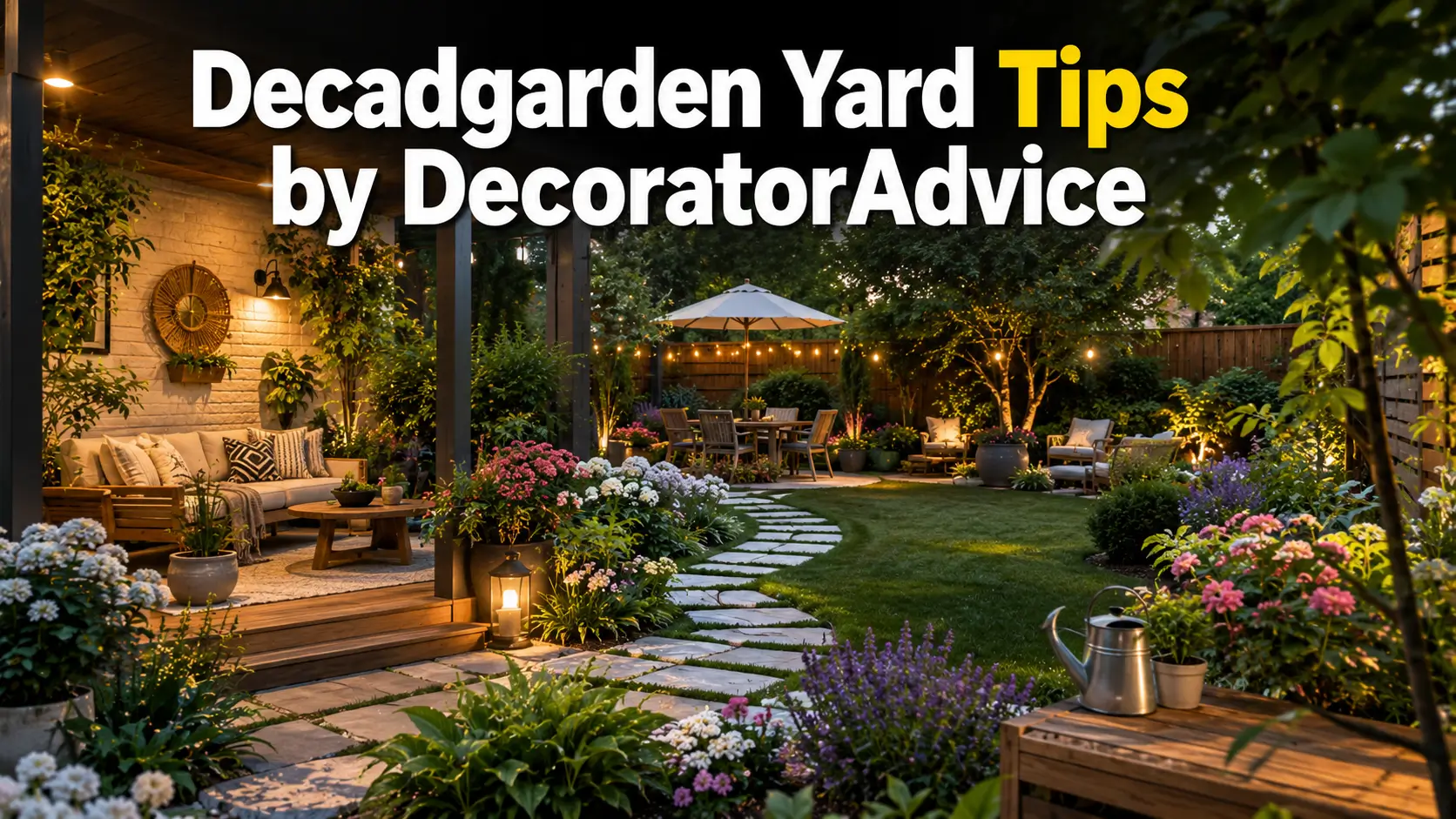

Creating an Outdoor Space That Feels Natural and Useful
Decadgarden Yard Tips by DecoratorAdvice can help you turn a small yard into a practical, attractive space that feels comfortable and easy to use every day. Start by understanding the space, whether you have a huge garden, patch of grass, or small outdoor corner.
Good yard design needs a clear plan. Avoid random decorations and focus on layout planning, plant selection, lighting, seasonal care, and maintenance. Choose features that match your backyard and the way you use your outdoor spaces.
Create balance and harmony between plants, flowers, grass, greenery, seating spaces, pathways, and decorations. With careful planning and proper design, these various elements can create a harmonious, serene, and well-functioning yard without making maintenance difficult.
Start With a Practical Assessment of Your Yard
Before buying plants or materials, spend some time studying your yard. This simple step can prevent many common landscaping problems.
Walk around the entire space at different times of day. Notice which areas receive full sun, partial shade, or very little direct sunlight. A location that looks sunny in the morning may become shaded later because of a house, wall, tree, or neighboring structure.
You should also look at drainage. After rainfall or watering, check whether water disappears quickly or remains in certain areas. Persistent standing water can damage plants and make paths or seating areas difficult to use.
Pay attention to the existing features, too. Mature trees, fences, utility areas, sheds, steps, and established plants can all affect your layout.
A basic assessment should cover:
| Yard factor | What to check | Why it matters |
| Sunlight | Full sun, partial shade, or shade | Helps determine suitable plants |
| Soil | Texture, fertility, and condition | Affects plant growth |
| Drainage | Wet or dry problem areas | Prevents root and surface problems |
| Space | Available planting and activity areas | Helps create practical zones |
| Existing features | Trees, fences, paths, structures | Influences the final layout |
| Access | Entry points and walking routes | Keeps movement convenient |
| Maintenance | Time available for upkeep | Prevents an overly demanding design |
Define How You Want to Use the Space
A yard should support your actual lifestyle. If you mainly want a quiet place to sit, you don’t need to dedicate most of the space to lawn. If children need an open play area, planting beds shouldn’t consume every usable section.
Think about your main activities before deciding where features should go.
You might want space for:
- Outdoor seating
- Dining or entertaining
- Gardening
- Playing
- Relaxing
- Walking between different areas
- Growing herbs or vegetables
- Creating privacy
- Keeping an open lawn
If you have several goals, divide the yard into functional areas rather than trying to make every section serve every purpose.
Set Priorities Before Buying Materials or Plants
Create two categories: necessary improvements and optional improvements.
Fix drainage, damaged surfaces, unsafe steps, or difficult access before spending money on decorative features. There is little value in installing attractive lighting around a patio that has drainage problems.
Your budget should also include future maintenance. A feature that looks inexpensive initially can become costly if it needs frequent repairs, replacement, watering, or specialized care.
Plan Yard Zones That Match Your Daily Needs
Once you understand the space, create a simple layout. You don’t need a complicated landscape plan. You need a clear idea of what each area will do.
Place frequently used spaces where they’re convenient to reach from the house. A dining or seating area, for example, is usually more practical when you can access it without crossing a large planting bed.
Gardening areas should also be easy to reach. If watering tools, soil, or garden equipment are stored nearby, regular maintenance becomes less of a chore.
Paths should connect the places you actually use. A pathway that looks attractive but doesn’t lead anywhere useful adds cost without improving the yard.
Create a Simple Layout That Works
Start by identifying the main entrance into the yard. From there, consider the most natural route to the patio, garden, lawn, or other important areas.
Keep walking routes clear. Furniture shouldn’t force people to squeeze through narrow spaces, and plants shouldn’t eventually grow into pathways.
Also consider the view from inside your home. A garden can become part of the home’s visual environment when plants, trees, seating, or other features are positioned where they’re visible through windows.
Leave some open space. A yard doesn’t need to be filled to look finished. Empty areas can provide visual balance and make the space easier to use.
Choose Plants Based on Your Yard’s Conditions
Plant selection should begin with growing conditions rather than appearance. A plant may look perfect in a garden center but struggle if your yard doesn’t provide the right amount of sunlight, moisture, soil conditions, or space.
Check the mature size of every plant before placing it. A small shrub can eventually become large enough to block windows, crowd paths, interfere with other plants, or require repeated pruning.
Group plants according to their needs. Plants with similar water and sunlight requirements are easier to manage when planted together.
Combine Plants for Different Roles
A balanced planting area often combines plants with different heights and functions.
You can use:
- Trees for shade, structure, or visual height
- Shrubs to define spaces and provide volume
- Flowering plants for seasonal color
- Ground covers to fill suitable low areas
- Edible plants for herbs, vegetables, or other useful crops
Think about the appearance of the planting area over time. Some plants provide interest for only part of the year, while others offer structure for longer periods.
Avoid placing every plant at the same height. Different layers can make a garden feel deeper and more organized.
Reduce Maintenance With Smarter Plant Selection
Low-maintenance landscaping doesn’t mean planting nothing. It means choosing plants and arrangements that fit the amount of care you can realistically provide.
Avoid overcrowding. Closely packed plants may initially look lush, but they can compete for water and space as they grow. Crowding can also make pruning and inspection more difficult.
A better strategy is to allow plants room to reach their expected size. This can reduce unnecessary pruning and make routine care easier.
Use Hardscaping to Give the Yard Structure
Hardscaping includes the non-plant elements of a yard, such as patios, pathways, raised beds, borders, steps, and other permanent surfaces.
These features give the yard structure. They also determine how people move through the space and where activities take place.
Hardscaping should be selected for function first and appearance second. A material that looks attractive but becomes slippery, difficult to clean, or unsuitable for heavy use may not be the right choice.
Build Practical Pathways
A good pathway should connect two useful points and provide a stable walking surface.
Consider where people naturally walk. If everyone keeps crossing a particular section of lawn to reach the same destination, that route may deserve a proper path.
Keep pathways wide enough for comfortable movement. Avoid unnecessary turns and complicated layouts.
Drainage matters as well. Water should not collect on the surface or flow toward areas where it can cause damage.
Add Patios and Other Functional Surfaces
A patio can create a dedicated area for seating, dining, or entertaining.
Its size should match the furniture and activities you expect to use there. A table and chairs need more room than the table itself because people need space to sit, stand, and move around.
Think about the relationship between the patio and the house. Convenient access can make an outdoor space much more useful because you won’t have to carry food, drinks, or other items across the entire yard.
Define Garden Areas With Raised Beds and Borders
Raised beds can organize planting areas while making them visually distinct from surrounding lawn or paths.
Borders and edging can also create cleaner transitions between different surfaces. They work best when they have a practical purpose rather than simply adding another decorative element.
Keep maintenance in mind. Complicated borders can make mowing difficult and create extra areas where leaves, soil, and debris collect.
Design an Outdoor Living Area That Feels Comfortable
Outdoor furniture should fit the available space instead of overwhelming it.
Before purchasing anything, measure the area. Include room for people to walk around furniture and pull chairs away from tables.
Think about weather exposure as well. Strong sunlight, rain, wind, and moisture can affect outdoor furniture and fabrics.
Shade can make an outdoor seating area much more comfortable during hot periods. Depending on the yard, shade may come from trees, structures, umbrellas, or other suitable features.
Make Small Yards Feel More Usable
A small yard doesn’t need to feel crowded.
Choose furniture that matches the scale of the space. Multifunctional pieces can also help when every square foot matters.
Vertical planting can add greenery without taking as much ground space. Wall-mounted planters, trellises, and carefully selected climbing plants can create height while preserving floor area.
Use clear zones instead of adding many small features. One well-planned seating area can be more useful than several tiny decorative spaces.
Add Outdoor Lighting for Safety and Usability
Outdoor lighting should have a purpose. Instead of placing lights everywhere, identify areas where illumination improves safety, visibility, or atmosphere.
Pathways, steps, entrances, seating areas, and important landscape features are common places to consider lighting.
Good placement matters as much as the number of fixtures. Lights should provide useful visibility without creating harsh glare.
Use Ambient Lighting for General Visibility
Ambient lighting provides general illumination for an outdoor area.
In seating spaces, softer lighting can help create a comfortable atmosphere without making the area feel overly bright.
The goal is to make the space usable while keeping the lighting balanced.
Use Task Lighting Where You Need Clear Visibility
Task lighting is useful where people need to see clearly.
Examples include:
- Steps
- Outdoor work areas
- Entrances
- Pathways
- Areas used for food preparation
These locations benefit from lighting that prioritizes visibility over decoration.
Use Accent Lighting Selectively
Accent lighting can draw attention to a tree, planting bed, wall, or architectural feature.
Use it selectively. Lighting every feature can make the yard look visually busy and may create unnecessary light.
Position fixtures carefully to avoid shining light directly into people’s eyes or nearby windows.
Improve Lawn Health With Consistent Care
A healthy lawn depends on consistent care rather than occasional major efforts.
Mow regularly enough to prevent excessive growth, but don’t treat mowing as the only part of lawn maintenance. Watering, soil conditions, drainage, and lawn stress also matter.
Look for signs of trouble. Thin areas, bare patches, unusual discoloration, standing water, or persistent weeds can indicate an underlying problem.
If one area repeatedly fails, investigate why instead of simply reseeding it again. The cause could be poor drainage, excessive shade, compacted soil, heavy foot traffic, or unsuitable growing conditions.
Keep lawn edges manageable, especially where grass meets planting beds and paths. Clean edges can make the entire yard appear more organized.
Reduce Water Use Without Neglecting Plants
Water efficiency starts with understanding what plants actually need.
Different plants have different moisture requirements. Treating every part of the yard the same can lead to overwatering some plants while leaving others stressed.
Group plants with similar watering needs whenever possible. This makes irrigation easier to manage.
Mulch can also help suitable planting areas by reducing moisture loss from exposed soil and helping regulate soil conditions.
Use Simple Water-Saving Practices
A practical watering routine can include:
- Watering during cooler parts of the day
- Checking soil moisture before watering
- Repairing leaks in irrigation equipment
- Avoiding unnecessary watering of paths and paved areas
- Adjusting watering when rainfall provides sufficient moisture
- Grouping plants according to water requirements
- Using mulch where appropriate
More water isn’t automatically better. Excessive watering can create its own problems, especially when soil drains poorly.
Make the Yard More Sustainable
A more sustainable yard usually begins with simple choices.
Choose plants that are appropriate for your local growing conditions instead of creating a landscape that requires constant intervention.
You can also reduce unnecessary lawn areas where appropriate. Lawn can be useful, but maintaining large areas may require considerable mowing, watering, and other care.
Reuse suitable organic yard material when practical. Leaves and other plant material can sometimes be managed as part of the garden rather than treated entirely as waste.
Durable materials can also reduce the need for frequent replacement. When selecting hardscaping, consider how well the material will perform under the conditions it will face.
A sustainable yard doesn’t have to look wild or unfinished. It can be carefully designed while using resources more efficiently.
Maintain the Yard Through Every Season
Seasonal maintenance prevents small issues from becoming larger problems. The exact timing depends on your local climate and the plants in your yard, but the basic tasks can be organized throughout the year.
Spring Yard Tasks
Spring is a useful time to inspect the yard after colder weather.
Check plants, paths, drainage areas, outdoor furniture, lighting, and irrigation equipment. Remove damaged plant material where appropriate and prepare planting areas for the growing season.
Spring maintenance may include:
- Inspecting plants for winter damage
- Cleaning outdoor areas
- Checking drainage
- Inspecting irrigation
- Preparing planting beds
- Refreshing mulch where needed
- Checking pathways and hardscaping
Summer Yard Tasks
Summer usually increases the importance of watering and monitoring plant stress.
Check the soil and plants regularly rather than following a rigid watering routine regardless of weather.
Continue lawn care, inspect plants for pests or damage, and keep outdoor living areas clean and usable.
Fall Yard Tasks
Fall is a good time to prepare the yard for changing weather.
Remove leaves where they create problems, inspect outdoor features, and address damaged areas before winter.
You can also review which parts of the yard performed well during the growing season and which areas need changes.
Winter Yard Tasks
Winter maintenance depends heavily on local weather.
Protect plants that require protection, monitor damage after severe weather, and keep walking areas safe.
Winter is also a useful planning period. Review your yard’s performance and decide which improvements should be completed during the next suitable season.
Upgrade Your Yard Without Overspending
You don’t need to renovate the entire yard at once.
Start with improvements that solve actual problems. Fixing drainage, improving a poor pathway, reorganizing an overcrowded planting bed, or repairing damaged lawn can provide more value than adding several decorative objects.
Break larger projects into stages. This makes it easier to control costs and evaluate each improvement before moving on.
When comparing options, consider total cost rather than purchase price alone. A cheap feature that requires frequent repair or maintenance may cost more over time than a durable alternative.
Affordable Improvements With a Noticeable Impact
Some improvements can change the appearance and usability of a yard without requiring a major renovation.
Consider:
- Cleaning and reorganizing existing spaces
- Refreshing garden borders
- Adding suitable mulch
- Repairing bare lawn areas
- Rearranging existing furniture
- Adding targeted lighting
- Pruning overgrown plants
- Creating a simple pathway
- Improving the layout of planting beds
A cleaner, better-organized yard can often look significantly better before you add anything new.
Avoid Common Yard Planning Mistakes
Several mistakes repeatedly create unnecessary work.
Choosing plants based only on appearance can result in poor growth when the plant doesn’t match the available sunlight, soil, moisture, or space.
Ignoring mature plant size can create crowded beds and increase pruning needs.
Overusing decorative features can make a yard feel cluttered. Every feature should either serve a useful purpose or contribute meaningfully to the overall design.
Ignoring drainage can cause persistent problems with plants, paths, and outdoor surfaces.
Installing too much lighting can create glare and make the design feel excessive.
Another common mistake is starting with decoration before solving functional problems. A beautiful yard still needs safe paths, suitable planting conditions, practical access, and manageable maintenance.
A successful yard isn’t the one with the most features. It’s the one where the features work well together.
A Practical Decadgarden Yard Planning Checklist
Use this checklist before and during your yard project:
- Assess sunlight throughout the day
- Check soil and drainage conditions
- Identify existing trees and structures
- Decide how you want to use each area
- Create practical yard zones
- Plan useful walking routes
- Select plants according to growing conditions
- Consider mature plant size
- Plan hardscaping before planting
- Arrange furniture with enough movement space
- Add lighting where safety or usability requires it
- Create a realistic watering routine
- Plan seasonal maintenance
- Set a budget before purchasing materials
- Complete essential repairs before decorative upgrades
How to Put Decadgarden Yard Tips by DecoratorAdvice Into Practice
The easiest way to apply these ideas is to work in a logical sequence.
Start with assessment. Understand the yard before making major decisions.
Move to planning. Decide what each area should accomplish and where different activities should take place.
Complete structural work next. Pathways, patios, raised beds, borders, and drainage-related improvements are easier to handle before the final planting is established.
Add plants according to conditions. Choose varieties that fit the available sunlight, soil, moisture, and space.
Add comfort and lighting afterward. Furniture and lighting should support the layout rather than dictate it.
Finish with maintenance. Establish routines for watering, mowing, pruning, cleaning, and seasonal inspections.
For example, imagine a small yard with an unused corner, an overcrowded flower bed, and a seating area that receives too much afternoon sun. Instead of buying random decorations, the homeowner could reorganize the planting bed, create a clearly defined seating zone, add suitable shade, and use targeted lighting. The result would improve both appearance and everyday use without requiring a complete redesign.
This step-by-step approach also makes it easier to identify what actually works. If a particular area remains difficult to maintain, you can adjust that section without rebuilding the entire yard.
FAQs About Decadgarden Yard Tips by DecoratorAdvice
Q1.What are Decadgarden Yard Tips by DecoratorAdvice?
They are practical yard-planning ideas that focus on layout, plants, outdoor spaces, lighting, seating, maintenance, and decoration. The goal is to create a yard that looks attractive while remaining functional and manageable.
Q2.How can I improve a small yard?
Use the available space carefully. Choose appropriately sized furniture, create clear zones, use vertical planting where suitable, and avoid unnecessary decorations. Keeping some open space can also make a small yard feel less crowded.
Q3.How should I plan my yard before making changes?
Start by checking sunlight, soil, drainage, available space, existing plants, pathways, and structures. Then decide how you want to use each section before purchasing materials or plants.
Q4.Which plants are easiest to maintain?
The easiest plants are generally those that suit your local growing conditions. Choose plants based on their sunlight, soil, moisture, climate, and mature size instead of choosing them only because they look attractive.
Q5.What is the best way to organize a backyard?
Divide the yard into useful zones based on activities such as seating, gardening, entertaining, playing, or relaxing. Connect these areas with practical pathways and leave enough room for comfortable movement.
Q6.How can I make my yard more attractive without spending a lot?
Start with low-cost improvements such as pruning overgrown plants, cleaning the yard, refreshing borders, adding suitable mulch, repairing lawn areas, and rearranging existing furniture. Small improvements can make a noticeable difference.
Q7.How often should I maintain my yard?
Check your yard regularly and adjust maintenance according to the season, plants, lawn, and weather. Common tasks include watering, mowing, pruning, cleaning, checking drainage, inspecting lighting, and caring for planting areas.
Conclusion
Decadgarden Yard Tips by DecoratorAdvice show that a useful yard starts with smart planning, not expensive decoration. Whether you have a small outdoor corner or a large garden, focus on how you use the space before choosing plants, seating, pathways, lighting, or decorative features. A balanced layout can make your yard more comfortable, attractive, and easier to maintain.Start with simple improvements that solve real problems. Choose plants that fit your space, keep pathways practical, arrange seating for comfort, and use lighting where it adds safety or function. With regular maintenance and careful planning, you can create an outdoor area that works well throughout the year.
